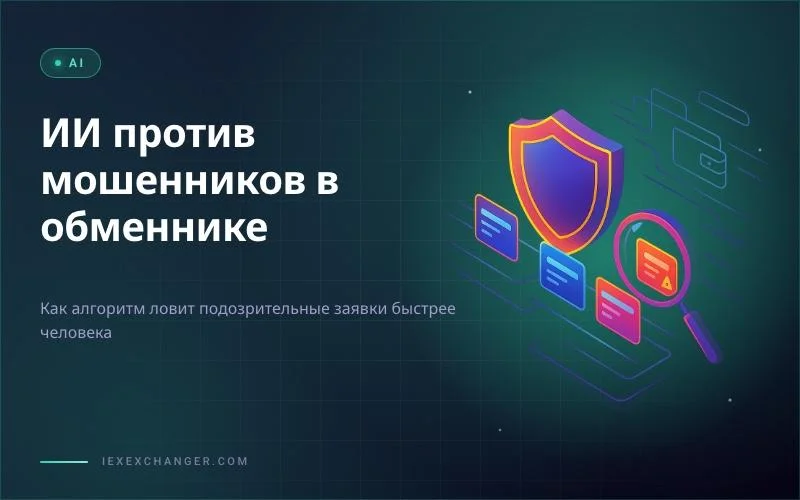
AI transaction monitoring is what closes the 3 a.m. gap for a crypto exchanger: a $48,000 transfer arrives from an unfamiliar IP, no compliance officer is awake, and the system scores the risk in seconds — deciding whether to clear it, hold it, or flag a human to look closer. Here's what it actually does well in 2026, and where it still falls short.
What AI transaction monitoring actually is
In plain terms, it's software that scores every deal your exchanger processes — amount, speed, wallet history, client behavior — and flags anything that doesn't fit the normal pattern. Instead of a compliance officer manually cross-checking spreadsheets, the algorithm compares a transfer against thousands of similar ones in a fraction of a second.
For an exchanger this isn't a nice-to-have. Banks and payment partners rarely close accounts because you deal in crypto — they close them because a suspicious transaction slipped through unnoticed.
What it already handles on its own
A short list of what genuinely runs without a human watching every case:
- Client scoring by history — a brand-new account making a first large transfer gets flagged automatically.
- Wallet address checks against sanctions and known-compromised address lists.
- Structuring detection — spotting when one large sum gets split into a dozen smaller transfers.
- Queue prioritization, so the sketchy cases surface first instead of getting buried among thousands of routine ones.
Where it still gets it wrong
Honestly? It's good at catching familiar schemes and weak at catching new ones. Fraudsters change tactics faster than a model retrains, and rare legitimate cases — say, a client receiving a large crypto inheritance for the first time — sometimes get flagged simply because the system has never seen anything like it.
Bottom line: AI cuts the routine workload dramatically, but the final call on borderline cases still belongs to a person who can actually pick up the phone and ask questions.
How to choose a system for your exchanger
Three things worth checking before you commit:
- Transparent scoring — can you see why a deal got a certain risk score, or is it a black box?
- Fast integration with the exchanger engine you already run, not a months-long build.
- Rules you can tune to your jurisdiction and volume, instead of a one-size-fits-all template.
Common rollout mistakes
The most common one: switch the system on and trust its verdicts blindly, turning off manual review entirely. The second: leave the rules untouched for months while new fraud patterns quietly slip past a model that's fallen behind.
Bottom line
AI monitoring doesn't replace an exchanger's compliance team — it strips away the routine and speeds up the response to real threats. If you're building these processes from scratch, it's easier to start on infrastructure that already has some of this built in, like iEXExchanger, a platform for launching your own crypto exchanger.