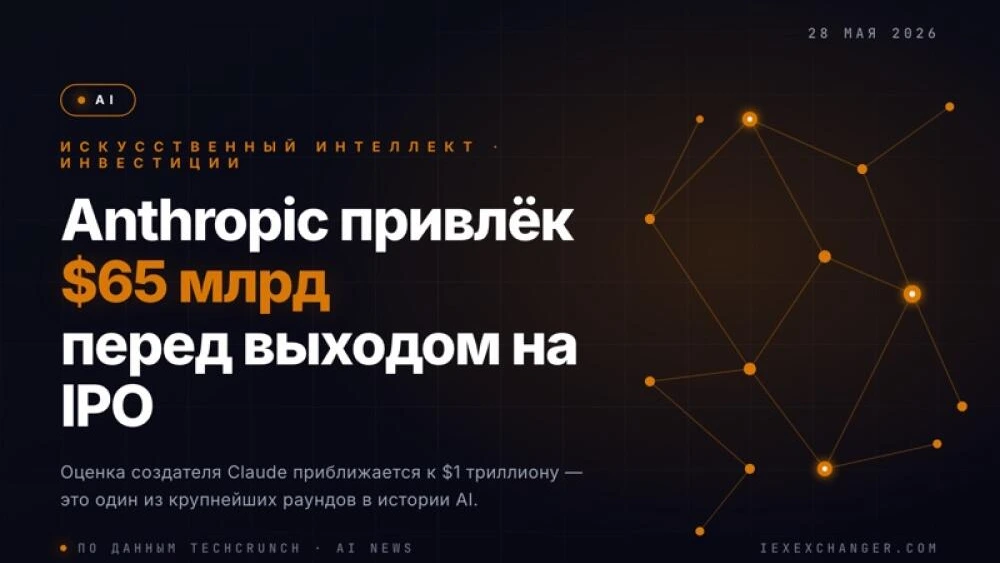
Anthropic — the developer of the Claude AI assistant — has closed one of the largest funding rounds in tech history: $65 billion. After the deal, its valuation approached the $1 trillion mark, all while the company prepares to go public.
What happened
Anthropic raised fresh capital from major investors who believe demand for powerful AI models will keep climbing. The money is needed above all for compute: training and running frontier models requires enormous data centers and expensive chips.
Almost simultaneously, the company unveiled a new version of its flagship model — Claude Opus 4.8 — with a tool for building complex workflows. It is part of a race in which leading labs ship ever more capable models every few months.
Why the number is so huge
Building frontier AI is a deeply capital-intensive business. Unlike classic apps, where the main cost is the engineering team, here the big money goes into hardware: thousands of specialized processors, electricity, and infrastructure.
Investors are willing to commit such sums because they see AI as a technology on the scale of the internet or electricity — one that will reshape nearly every industry. A near-trillion valuation means the market ranks Anthropic among the largest public companies in the world.
What it means for all of us
The more money flows into AI, the faster new products appear — assistants, agents, tools for work and creativity. For users that means smarter services, but also fiercer competition between big players for attention and data.
At the same time, the questions grow: how sustainable are these valuations, is a bubble inflating, and who will ultimately control the most powerful models. For now investors are voting with their money — and voting decisively.
In short
A $65 billion round and a near-$1 trillion valuation cement Anthropic's place among the world's top three AI companies. The artificial-intelligence race is accelerating, and the stakes rise every month.
From here, attention turns to two questions: whether such companies can justify investors' huge expectations, and how fast powerful models reach everyday products. The answers will largely decide how the current AI hype wave ends.