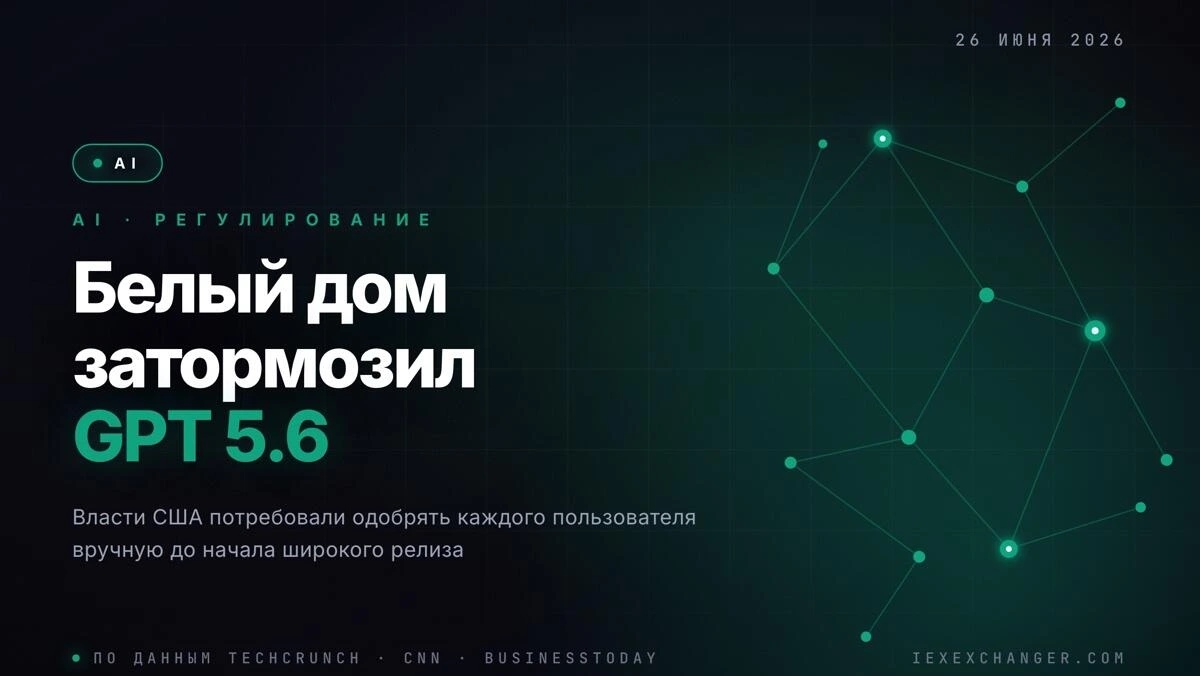
For three years, the Trump administration has consistently rolled back restrictions on AI development. So when reports emerged Wednesday that the White House had asked OpenAI to slow the rollout of GPT 5.6, it caught the industry off guard. The ask: hold the new flagship model back from the general public and require government approval for each individual customer during a controlled preview period.
The request came from two White House offices — the Office of the National Cyber Director and the Office of Science and Technology Policy. Officials say GPT 5.6 is roughly comparable in capability to Anthropic's Claude Mythos, a model that had already raised alarms in Washington for its potential use in offensive cyber operations. A system capable of probing secure networks or finding software vulnerabilities isn't just a product question — it becomes a national security question.
Sam Altman agreed. He told OpenAI staff the company would cooperate and described a process of "approving access customer by customer" throughout the preview phase. A broader public release could follow within a couple of weeks if nothing goes wrong. Technically this is voluntary — no law compels it. But when the White House calls, voluntary is a relative term.
The context matters. OpenAI is preparing to go public. Visibly cooperating with federal agencies right now sends a message to investors: the company can be governed, can work with Washington, and won't blow up a regulatory relationship ahead of its IPO. Altman gets to look responsible without being forced to.
For the broader industry, this is the moment to watch. An administration that spent three years cutting AI red tape just inserted itself into the release schedule of a commercial model. If this preview-and-approve mechanism takes hold, the next iteration may come with formal requirements, set criteria, and no option to call it voluntary.