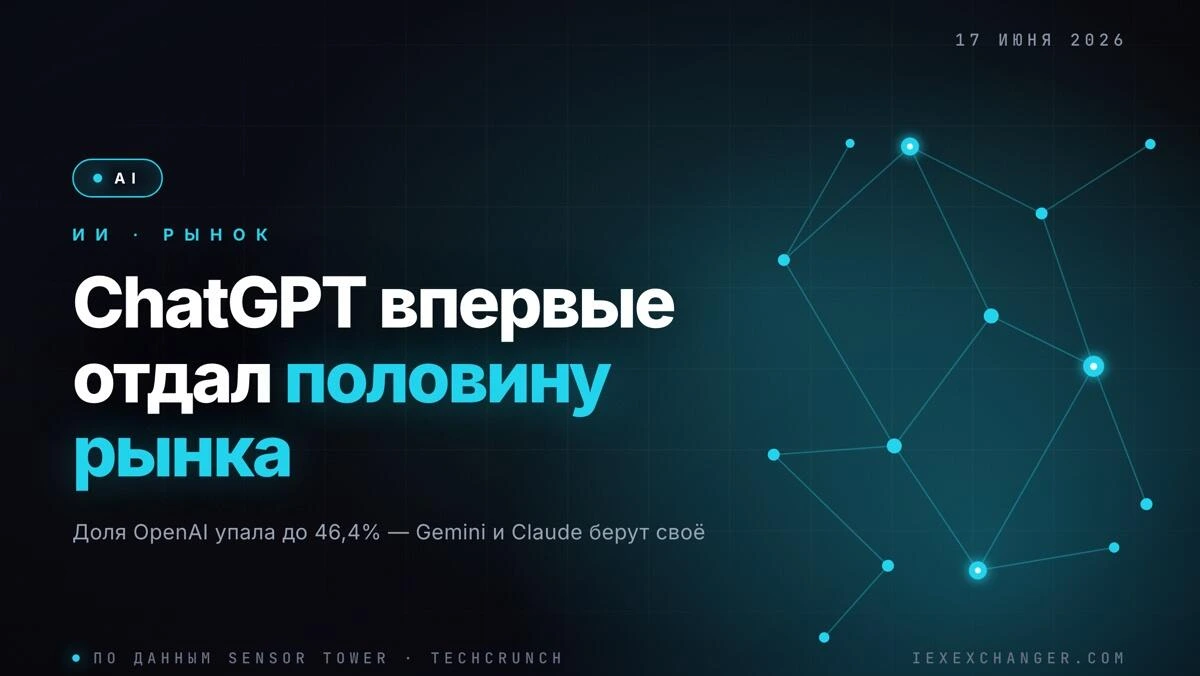
For most of its existence, ChatGPT was synonymous with AI assistants. That changed in May. According to Sensor Tower's State of AI Report, OpenAI's flagship product held just 46.4% of the global AI assistant market at the end of May — the first time it has dipped below half since launch.
At 1.1 billion monthly active users, ChatGPT is still comfortably the world's most-used AI product. But Gemini has climbed to 27.7%, fueled by deep integration with Android and Google's sprawling app ecosystem. Claude reached 10.3%, and despite its smaller user base of 245 million, it outperforms both rivals on subscription conversion: 13% of Claude users pay for a premium plan. Grok, Perplexity, DeepSeek, and Meta AI each remain below 5%.
One subplot that surprised analysts: OpenAI's February contract with the Department of Defense. Sensor Tower found measurable uninstall spikes in the weeks after the deal was announced. The data suggests users care about more than model quality — they factor in which company they want to hand their conversations to.
The broader market is still booming. H1 2026 AI assistant spending is projected to hit $4.2 billion, up from $1.83 billion a year earlier — more than doubling in twelve months. The irony is that this growth is flowing partly away from OpenAI. When the pie expands this fast, even the biggest slice can shrink in relative terms.
OpenAI has been running ads to roughly 17% of daily ChatGPT users as of May — a new revenue lever, but one that risks accelerating churn when competitors offer clean, ad-free experiences.
The 50% threshold is arbitrary, but the direction is not. The AI assistant market has stopped being a one-company story — and with Gemini and Claude both gaining momentum, the gap is only going to get more competitive from here.