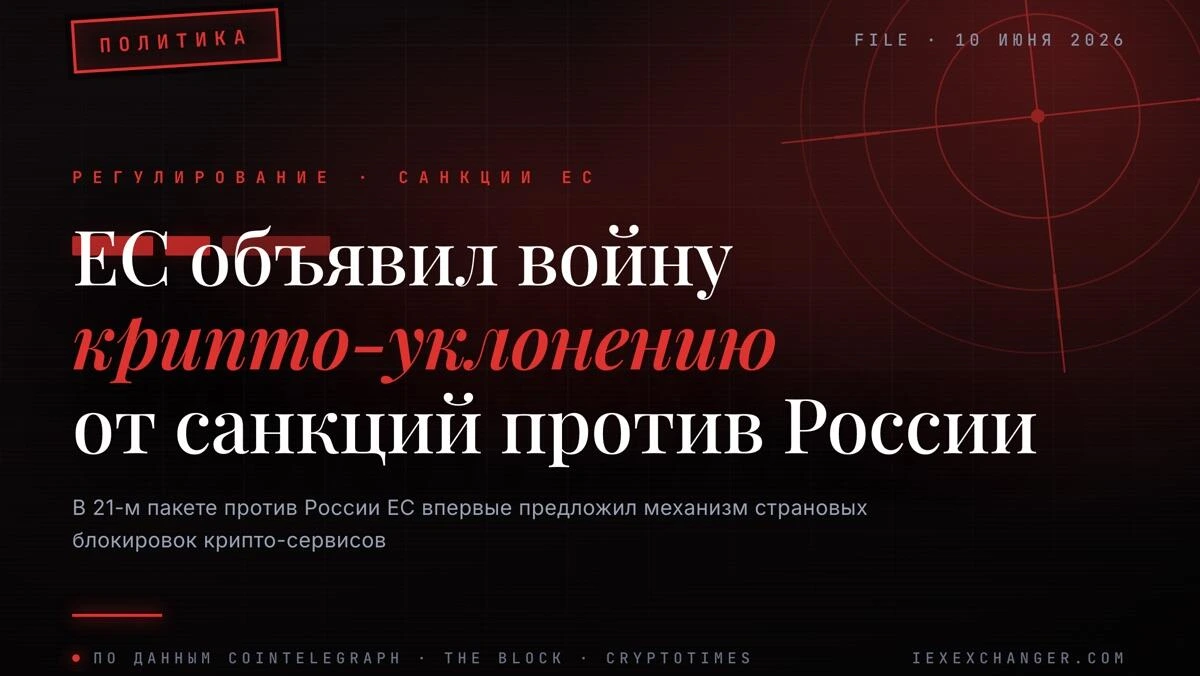
Twenty-one rounds, four years — and only now does the EU's Russia sanctions architecture take a serious, structural swing at crypto networks. The European Commission put forward its 21st sanctions package on June 9, 2026, with crypto platforms occupying a dedicated enforcement block for the first time.
The headline measure: a transaction ban on 11 crypto platforms. Commission President Ursula von der Leyen described the targets as firms that either directly served sanctioned individuals and entities or helped route funds around restrictions through third-country intermediaries. Their names haven't been disclosed publicly — Brussels customarily withholds designations until the full package clears formal adoption.
More consequential than the specific list is the new legal instrument buried in the proposal. For the first time, the EU is claiming a country-wide option: if a non-EU jurisdiction is found to systematically host platforms running Russian sanctions-evasion operations, the bloc can ban all crypto service flows with that entire country — not just individual companies. It's a shift from case-by-case enforcement to pressure on whole regulatory environments.
The broader picture: in February, Elliptic published a detailed report on the scale of Russia-linked crypto evasion. In May, the UK sanctioned HTX, Huobi, and 17 other Russia-connected crypto firms. The 21st EU package is the logical continuation — allies closing the same gaps from different angles, month by month.
The package still needs unanimous approval from all 27 EU member states, which routinely takes weeks to months. Until then, no firm is legally constrained by the new measures. But any exchange or service sitting in the gray zone of Russian-linked flows now has a very clear picture of where this is heading — and the EU now has tools it didn't have before.