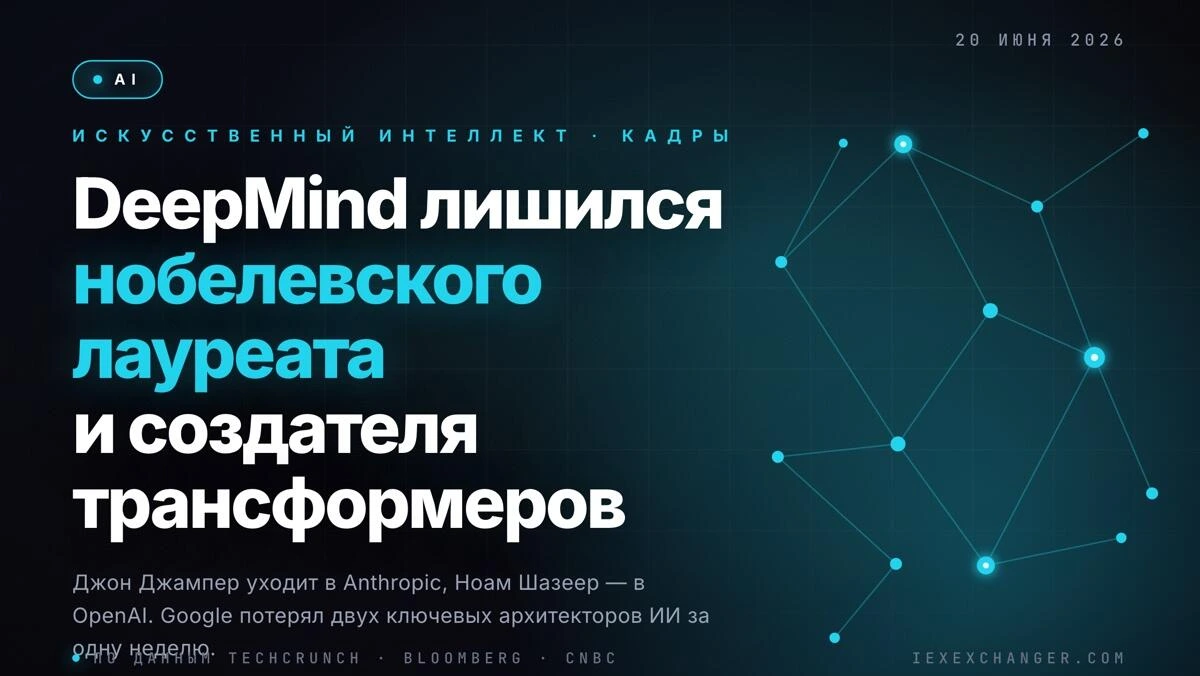
In the span of a week, Google lost two people whose work sits at the very foundation of modern AI. On June 20, John Jumper announced he was leaving Google DeepMind after nearly nine years to join Anthropic — the company behind the Claude model family.
Jumper isn't just a decorated researcher. He shared the 2024 Nobel Prize in Chemistry with DeepMind CEO Demis Hassabis for AlphaFold, the AI system that solved protein structure prediction — a problem that had stumped biologists and chemists for five decades. In a statement marking his departure, Jumper thanked Hassabis for "taking a real chance letting me lead the AlphaFold team just six months after finishing my PhD."
Two days earlier, on June 18, Noam Shazeer resigned as Google's VP of engineering and Gemini co-lead to join OpenAI. Shazeer is one of the co-authors of "Attention Is All You Need," the 2017 paper that introduced the Transformer architecture. Nearly every major language model today — GPT, Claude, Gemini itself — is built on that idea. Google paid $2.7 billion to bring Shazeer back from Character.AI in 2024. He stayed for less than two years before heading to Google's biggest competitor.
Neither departure was acrimonious. Both researchers spoke warmly about their time at Google, which makes the pattern more revealing, not less. The pull toward Anthropic and OpenAI isn't about bad blood — it's about what smaller, mission-focused organizations can offer that a tech giant often can't: faster decisions, direct influence over flagship products, and a shorter distance between research and what actually ships.
DeepMind remains one of the best-resourced AI labs in the world. But losing a Nobel laureate and the Transformer's co-architect in the same seven days is the kind of thing that raises harder questions about what's keeping people there — and what isn't.