
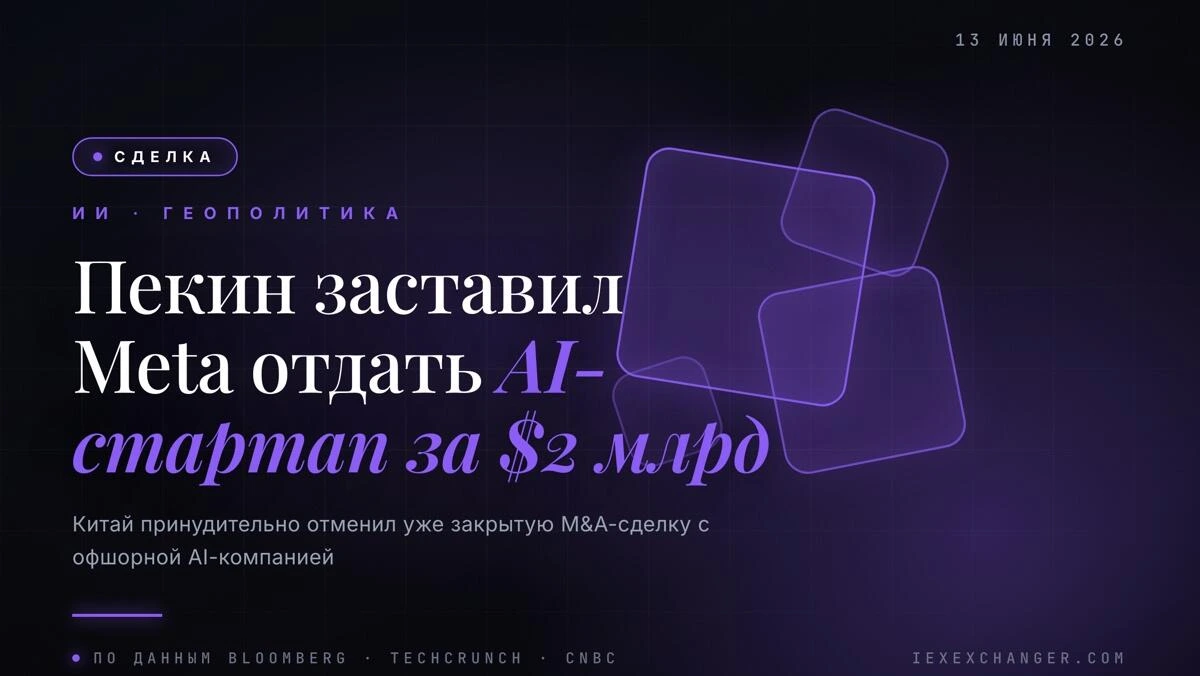
Manus moved to Singapore. Meta paid $2 billion. Neither was enough. In April, China's National Development and Reform Commission formally ordered the deal reversed — and Meta is now doing exactly that: cutting the startup off from its systems and telling employees to wind down anything running on Manus infrastructure.
The Chinese-founded agentic AI startup made headlines in late 2024 with viral demos of its autonomous agents completing complex multi-step tasks without human guidance. The founders relocated their team to Singapore before Meta announced the acquisition in December 2025. The offshore setup looked like a clean break from Chinese jurisdiction. It wasn't.
Beijing's NDRC issued the divestiture order on April 27, citing national security and potential violations of China's technology export controls. The argument was direct: the founders' origins and the technology's roots matter more than the company's Singapore address. Offshore incorporation, in Beijing's view, doesn't neutralize strategic sensitivity.
Meta has now severed Manus from its internal systems and halted joint projects. The founders are exploring raising roughly $1 billion to buy the company back — at half the price Meta originally paid. Among the options on the table: a joint venture with Chinese partners and a listing on the Hong Kong Stock Exchange. Manus has continued shipping product updates throughout the unwind.
The Manus case fits a broader pattern. China has simultaneously introduced government approval requirements for U.S. investment in domestic AI companies and restricted researcher travel abroad. U.S. senators have raised a related concern: American capital, routed through Singapore vehicles, was effectively funding Chinese-origin AI development.
For U.S. venture investors, the deal ended in payment; Asian co-investors agreed to cooperate with the reversal. But the financial outcome is secondary to the precedent. Beijing demonstrated it can force back a closed $2 billion deal involving an offshore-incorporated company. For anyone evaluating AI acquisitions with Chinese roots, that's no longer a hypothetical risk — it's a documented case with a concrete price tag.