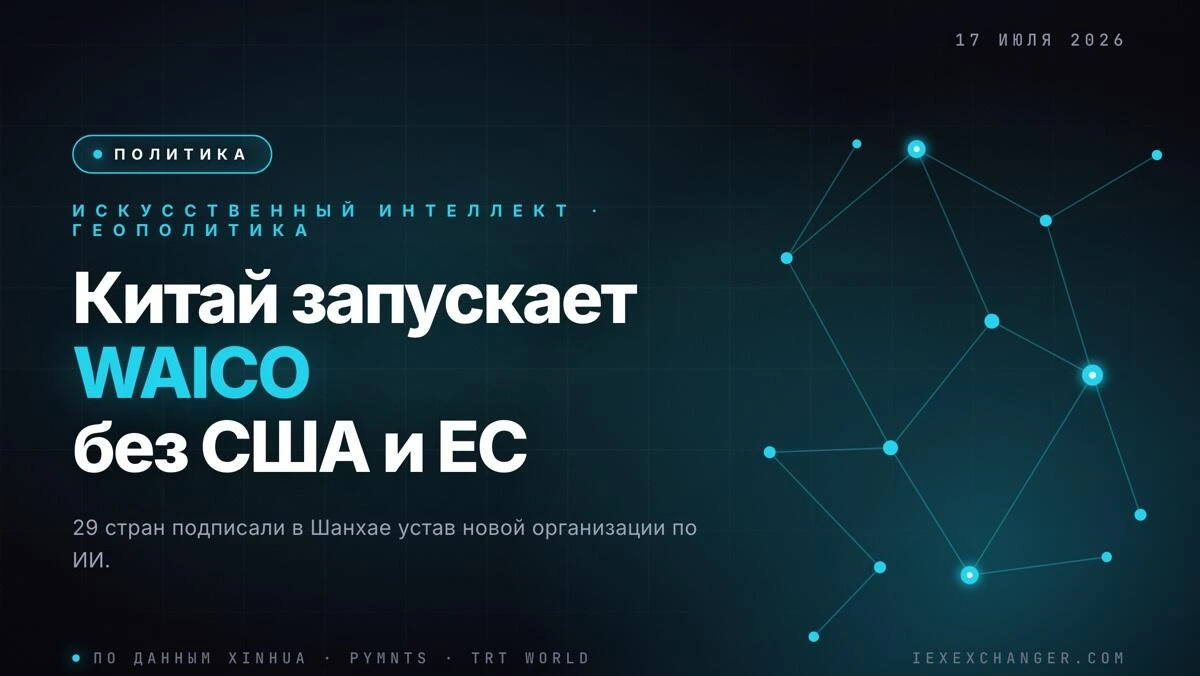
While Silicon Valley argues over who ships the next flagship model first, Beijing quietly signed up 29 countries to a brand-new international body. The World AI Cooperation Organization, or WAICO, was born on July 16 in Shanghai, headquartered in the same city, with a stated mission to make AI development "safe, fair and beneficial for all of humanity."
The founding roster is a mixed bag: Russia, Pakistan, Indonesia, Laos, Belarus, Serbia, Cuba, Venezuela, Kazakhstan, plus roughly a dozen more African and Asian states. UN Secretary-General António Guterres attended the signing ceremony, while China was represented by Foreign Minister Wang Yi. WAICO is set up as an intergovernmental body operating "in the spirit of the UN Charter" — language meant to signal it's a full-fledged international organization, not just a talking-shop.
The launch coincided with the opening of the World AI Conference (WAIC) in Shanghai, which President Xi Jinping attended in person for the first time since the event began. The symbolism is hard to miss: China wants to be seen as the architect of global AI rules while Washington and Brussels stay focused on narrower moves — AI safety summits here, MiCA-style rules or executive orders there.
What's more telling is who stayed home. No major American or European tech company showed up for the signing — not Google, not Microsoft, not OpenAI, none of their European counterparts either. WAICO is technically open to any country, but its first members are mostly Global South states, precisely the markets where China has been pushing cheap, open-source models as an alternative to pricier Western subscriptions.
Effectively, the world is now looking at two parallel tracks for AI governance: one built around US and European standards, another around Chinese ones. For countries like Kazakhstan or Pakistan, joining WAICO is less an ideological statement than a practical shortcut to cheap models and infrastructure without signing up for Western regulatory frameworks. Whether that split stays symbolic or hardens into competing technical standards is the question the new organization's first months will answer.