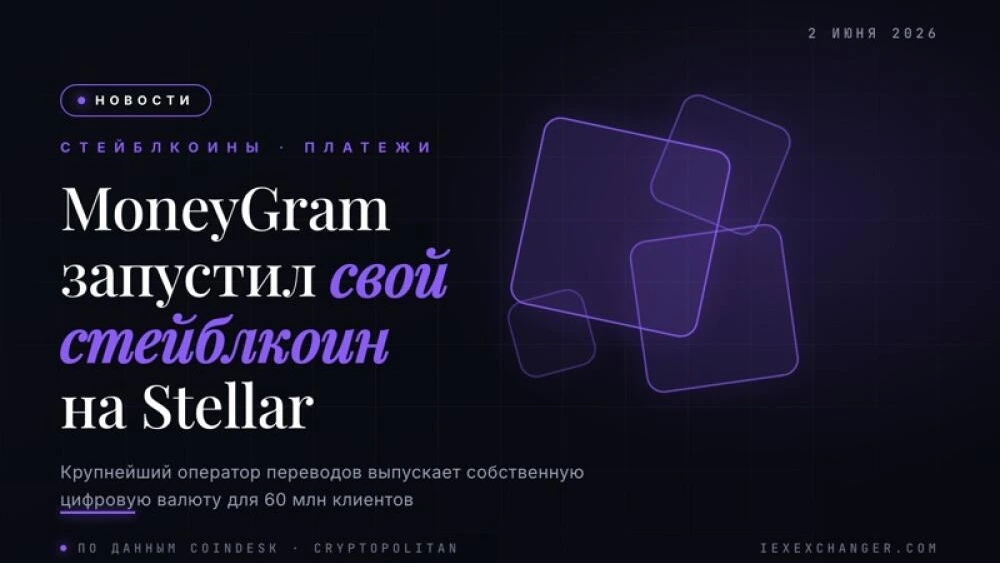
MoneyGram, one of the world's largest money transfer operators, officially launched its own dollar-pegged stablecoin MGUSD on the Stellar blockchain on June 2, 2026. The move signals a turning point for the cross-border payments industry: a mainstream financial giant is no longer just routing third-party digital dollars — it's issuing its own.
What Happened
MoneyGram announced the full launch of MGUSD, a USD-backed stablecoin integrated directly into the MoneyGram app. Users can now hold a dollar-denominated balance in a self-custodial wallet and send funds across the company's global payments network. The rollout starts in the United States, with an international expansion planned to reach 60 million customers and nearly 500,000 service locations worldwide.
How MGUSD Works
The token is issued by Bridge, Stripe's stablecoin infrastructure platform. Smart contracts for minting and redemption were developed by M0, and wallet infrastructure is provided by Fireblocks — an enterprise-grade stack assembled under one MoneyGram brand.
- Blockchain: Stellar (XLM)
- Issuer: Bridge (Stripe)
- Smart contracts: M0
- Wallet infrastructure: Fireblocks
Why It Matters
MoneyGram primarily serves people in markets where bank access is limited and transfer costs are a real burden. Shifting from third-party tokens to a proprietary stablecoin gives the company full control over the product, the user experience, and the unit economics of each transaction. The global stablecoin market currently sits at around $300 billion and is forecast to reach $4 trillion by 2030. MoneyGram joins PayPal, SoFi, and Western Union in betting on blockchain-powered payment rails.
What's Next
The U.S. launch is just the beginning. MoneyGram has maintained a five-year partnership with the Stellar Development Foundation, running USDC-powered remittance pilots in markets like Colombia and El Salvador. Now, with MGUSD, the company is scaling that infrastructure under its own banner. The pace of the international rollout will depend heavily on regulatory approvals — particularly given the active U.S. debate around stablecoin legislation.