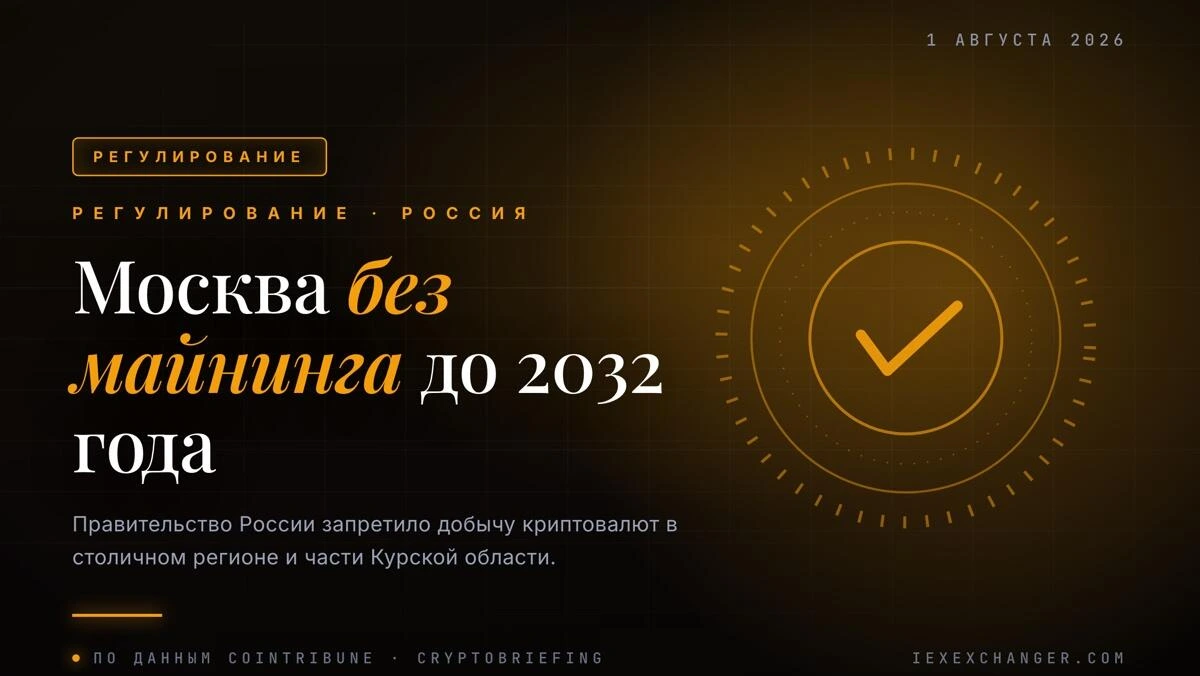
Starting August 15, mining cryptocurrency is officially off-limits in Moscow, the Moscow region, and part of Kursk region — no home rigs, no industrial farms, not even joining a mining pool remotely. Prime Minister Mikhail Mishustin signed Decree No. 936 on July 25, and it stays in force through the end of 2032 — nearly seven years.
The stated reason isn't politics, it's wiring. Officials point to 65 data centers already running in the region with a combined 734 MW of capacity, while total mining power draw has topped one gigawatt — roughly the consumption of a small city. Grid operators had been warning that Moscow's network is already stretched thin, and Kursk region sits on the border, where power reliability is especially fragile given the fighting nearby.
The ban doesn't just hit industrial operations with rows of ASICs. It also covers participation in mining pools, meaning someone physically located in the restricted zone technically can't mine remotely either, even if the hardware sits elsewhere.
This isn't the first such move. Since January 2025, mining has been banned across ten regions in the North Caucasus and in annexed territories, for the same reason: grid strain outweighs the tax revenue mining brings in. Now the list includes the capital and its region — the country's largest market.
Penalties for unregistered mining are also getting harsher. A bill under discussion would impose fines up to 2.5 million rubles and prison terms of up to five years. Against that backdrop, BitRiver founder Igor Runets, who runs one of Russia's largest mining hosting operations, was placed in pretrial detention on July 30 over a separate $12.5 million fraud case — formally unrelated to the decree, but it's adding to the industry's unease.
For miners who were running rigs near Moscow, the question now is where to relocate. Cheap power and spare capacity remain concentrated in Siberia and the Russian Far East, and that's where market participants expect most of the displaced hardware to end up over the coming months.