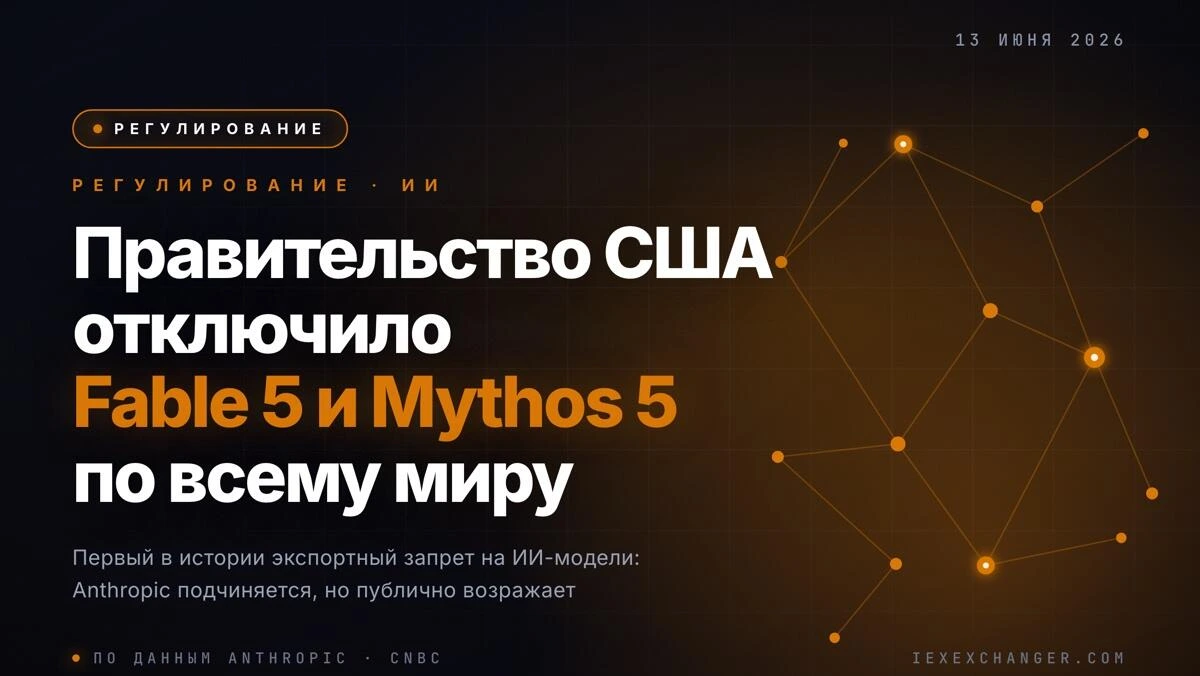
At 5:21pm ET on June 12, Anthropic received a government directive with a single sweeping instruction: suspend all access to Fable 5 and Mythos 5 for any foreign national. The legal basis was export control law. The practical consequence went further — because the company cannot separate foreign nationals from other users in real time, it took the only workable call: a full global shutoff of both models for every customer worldwide.
The trigger was a claimed jailbreak of Mythos 5. A company told US authorities it had found a way to bypass the model's guardrails by asking it to read a specific codebase and flag software vulnerabilities. Anthropic examined the technique and found it narrow, non-universal, and already available through OpenAI's GPT-5.5 — a standard tool in any security researcher's kit, not a novel threat exclusive to Anthropic's models.
Anthropic is complying. What it won't do is stay quiet. In its public statement, the company draws a sharp line: if any narrow jailbreak triggers an automatic model recall, the practical result would be a permanent moratorium on deploying frontier AI in the United States — for every lab, not just Anthropic. The company is calling for a written, statutory process for government decisions of this magnitude rather than an order arriving at five in the afternoon.
The wider stakes are plain. This is the first time a US agency has used export control authority to force a frontier AI lab to take its best models offline globally. Whether this stays a one-off incident or becomes the template for how Washington manages AI it decides it doesn't fully control is the question the entire industry is now asking.