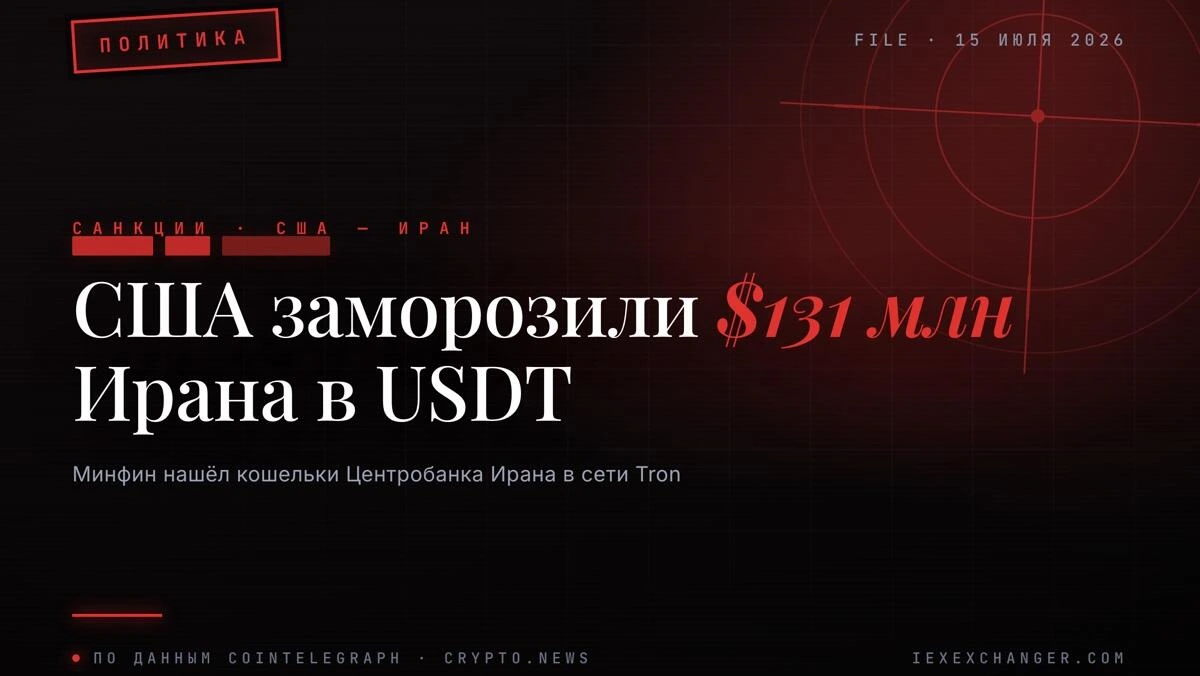
Four wallets on the Tron network, holding a combined $131 million in USDT, turned out to be tied to Iran's central bank — and are now frozen. The US Treasury announced the move on Tuesday, describing it as part of Operation Economic Fury, the campaign Washington has run against Tehran's shadow financial channels since last March.
The mechanics are straightforward. A central bank cut off from the dollar system has spent years routing payments — mostly for oil exports — through stablecoins instead. Treasury analysts track these flows alongside Tether, which can technically freeze any USDT sitting on an address it controls at any moment.
This is the second major hit on the same channels in months: in April, Tether blocked $344.2 million across similar wallets. In early June, OFAC also designated four of Iran's largest crypto exchanges — Nobitex, Wallex, Bitpin and Ramzinex — cutting local users off from a big chunk of the domestic market.
"Treasury will continue to aggressively follow the money and deny the Iranian regime access to the proceeds of its illicit revenue schemes," said Treasury Secretary Scott Bessent. The wording matters: it ties the crypto freezes directly to Washington's broader campaign against Iran's oil exports, running in parallel as tensions in the Middle East flare up again.
For the stablecoin market, the episode makes a point worth noting: USDT keeps its role as a global settlement unit precisely because Tether cooperates with US regulators on request. For sanctions evasion, that cuts the other way — a centralized issuer and a transparent ledger make large transfers far easier to trace than a wire routed through a chain of shell companies.