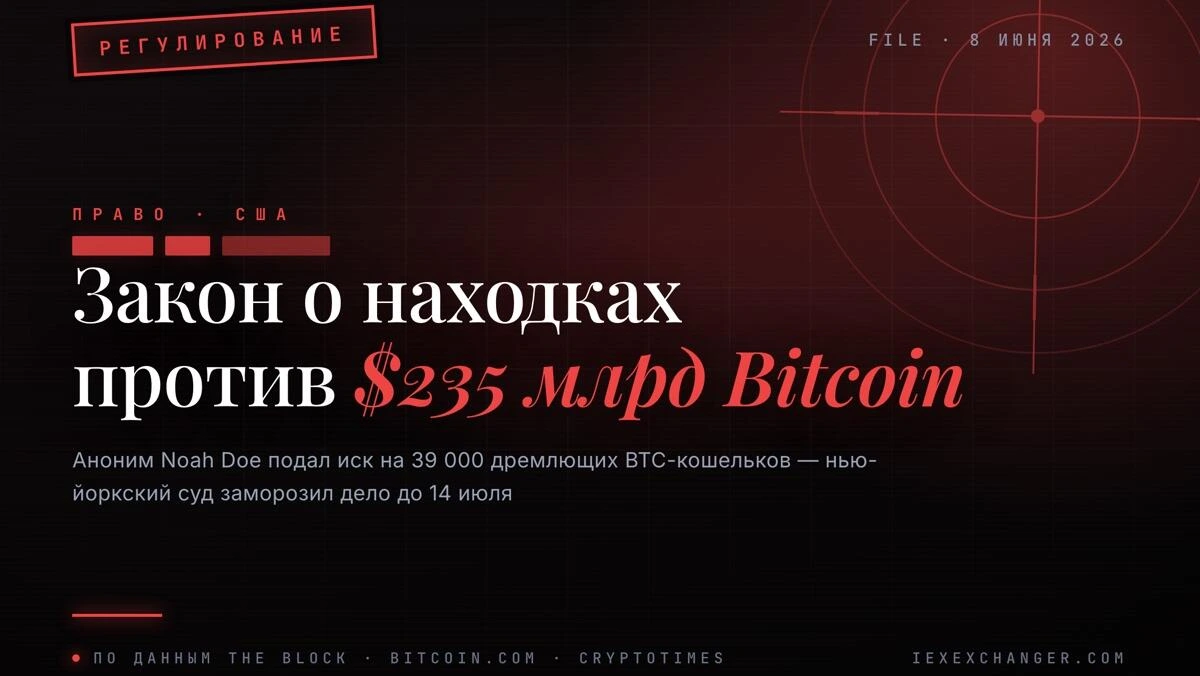
An anonymous plaintiff filing as "Noah Doe" sued in New York in March 2026 with an unusual legal theory: 39,069 Bitcoin wallets have sat dormant for years, their owners can't be found, and under New York's lost-property law the wallets should go to whoever located them. Together, those addresses hold roughly 3.8 million BTC — about $235 billion at current prices.
Doe, alongside two Wyoming LLCs, claims to have built an algorithm that identified dormant wallets with what he calls security vulnerabilities. They sent notices via OP_RETURN blockchain messages and a press release. Nobody responded. The theory: silence equals abandonment, and abandonment means a finder can take ownership under state law.
New York State Supreme Court Justice Kathy J. King froze proceedings on June 5 after attorney Ian Cohen filed an amicus brief. Cohen's argument: the lost-property statute was written for tangible objects — a coat, a phone, a set of keys — not for cryptographic keys on a blockchain. An OP_RETURN message and a press release don't meet constitutional notice standards, particularly for deceased owners, non-English speakers, or holders of older Bitcoin address formats. A hearing is set for July 14; plaintiffs must respond to opposing motions by July 7.
The wallets in question are no ordinary collection of forgotten coins. Among the 39,000 addresses are holdings from the 2014 Mt. Gox hack and, reportedly, wallets believed to belong to Satoshi Nakamoto. A detail that undermines the abandonment theory: in early June, one of the "dormant" addresses — last active in 2011 — sent 47.26 BTC, worth nearly $3 million, to another wallet. Hard to call something abandoned when it moves money during the lawsuit.
Doe's chances of prevailing are thin. Most legal experts say the lost-and-found doctrine simply doesn't translate to private keys controlling on-chain assets. But this case now forces a New York court to answer in writing: can a dormant Bitcoin wallet legally qualify as abandoned property? The answer, expected after July 14, will set a reference point for dormant inheritance claims, lost seed phrases, and assets frozen by exchange hacks — well beyond this one case.