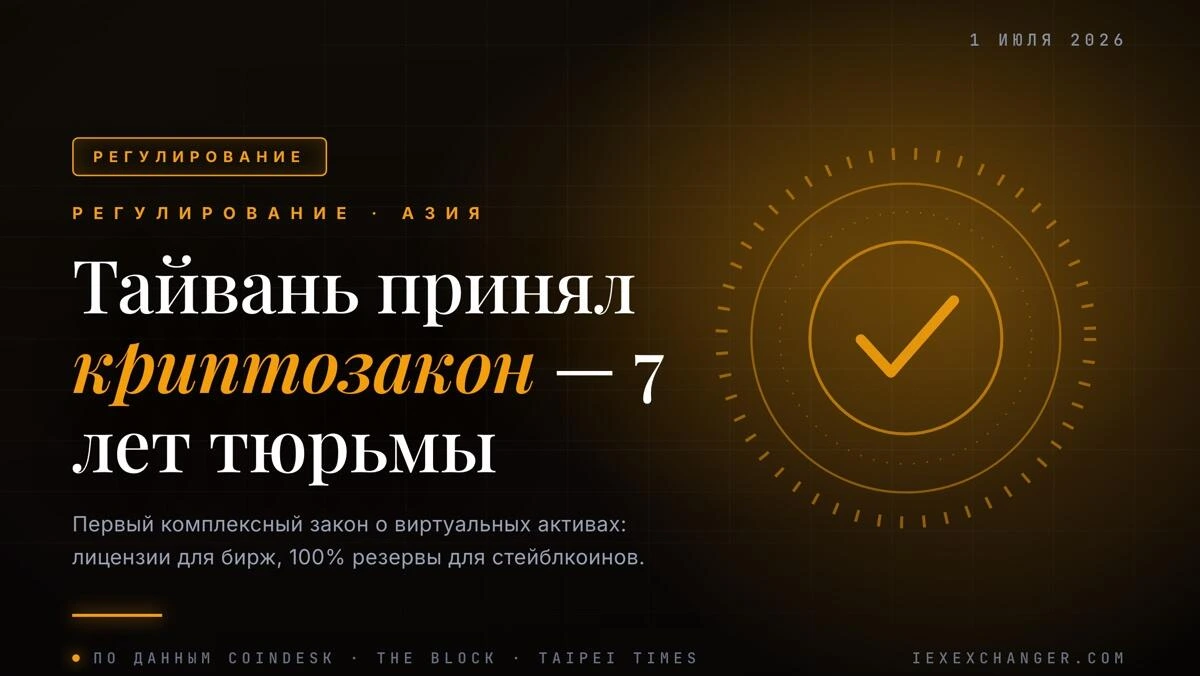
For years, Taiwan occupied an awkward middle ground. Crypto exchanges operated openly, trading volumes were substantial — but the legal framework was minimal. No licensing requirements, no formal reserve rules, penalties for misconduct were vague. On July 1, Taiwan's legislature closed that gap, passing the Virtual Asset Service Act in a third reading that formally puts the country's digital asset industry on regulated footing for the first time.
The core obligation is straightforward: every exchange, wallet provider, and platform dealing in virtual assets must obtain a government license. Operating without one is not a gray area — it is a crime. Stablecoin issuers face a higher bar. They need simultaneous approval from both the Central Bank of Taiwan and the Financial Supervisory Commission, and must maintain 100% asset reserves at all times. The dual-approval requirement signals that Taiwan sees stablecoins as a systemic risk worth close oversight.
The criminal element sets Taiwan apart from softer regimes. Running an unlicensed crypto operation carries up to seven years in prison and fines reaching NT$100 million (about $3.14 million). Most jurisdictions stop at administrative penalties. Taiwan did not — and that tells you something about how seriously regulators intend to enforce these rules, not just publish them.
Full implementation is still a process. President Lai Ching-te is expected to sign the law within ten days. After that, the FSC must draft nine pieces of secondary legislation before enforcement can begin in earnest. Realistically, that puts practical rollout in early 2027 — leaving existing operators time to prepare, apply for licenses, and restructure before the deadline arrives.
The broader picture is telling. Japan cut its crypto tax from 55% to 20% in June and approved a path for crypto ETFs. Hong Kong is building out its tokenized securities framework. Taiwan's move adds a third anchor in Asia-Pacific — a jurisdiction with clear rules, real criminal exposure, and room for legitimate businesses to operate with certainty. For anyone mapping where regulation is heading across the region, the picture just got meaningfully clearer.