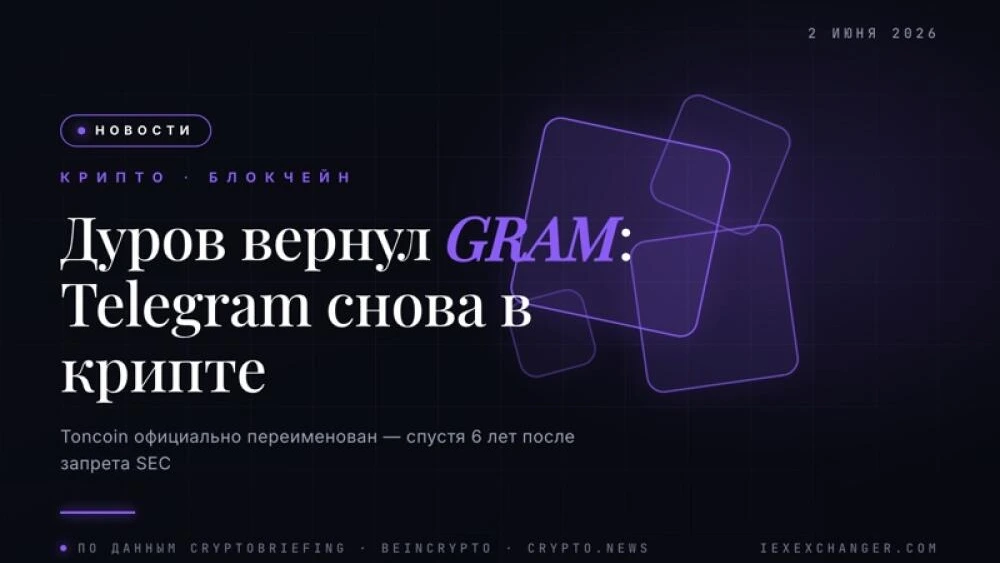
Pavel Durov has officially renamed Toncoin to GRAM, reclaiming the original token name the SEC blocked six years ago. This is more than a cosmetic rebrand: Telegram is reasserting direct control over one of the world's most widely-used blockchain networks.
What Happened
On June 1, 2026, Toncoin's ticker officially changed from TON to GRAM. The blockchain itself still carries the name The Open Network (TON) — only the coin's name and symbol are changing. No token swap is required: existing TON holders will automatically hold GRAM within approximately three weeks.
This is the fourth of seven steps in Durov's MTONGA roadmap ('Make TON Great Again'), launched in May 2026 when Telegram announced it would become the primary driving force behind the network.
Why the Name GRAM Matters
GRAM was Telegram's original cryptocurrency. In 2018, the company raised $1.7 billion in one of the largest ICOs in history to build its own blockchain. In 2020, the SEC intervened, forcing Telegram to pay an $18.5 million penalty and return $1.2 billion to investors.
After the shutdown, the open-source community relaunched the project as Toncoin under an independent TON Foundation. Now Durov is reclaiming both the name and the steering wheel.
What's Changed Under the Hood
Alongside the rebrand, Telegram has already delivered the first three MTONGA milestones:
- Catchain 2.0 — a consensus protocol achieving sub-second transaction finality.
- Six-fold fee reduction — bringing network costs close to zero.
- Largest validator status — Telegram's wallet holds approximately 28.2 million tokens, with 2.2 million actively staked.
Markets responded enthusiastically: TON surged 23–100% on May announcements, with the formal rebrand adding another ~10% gain.
Risks Worth Watching
Centralization raises real concerns. Telegram is simultaneously a messenger with 950 million users and the largest validator on its own blockchain — creating a single point of failure or regulatory pressure. One enforcement action against Telegram could ripple across the entire network.
Regulatory status is also unresolved. GRAM was previously classified as an unregistered security. Relaunching under that name with direct Telegram involvement could draw renewed attention from the SEC and global counterparts.
What's Next
Durov has teased three more MTONGA steps, details still undisclosed. The ticker transition on exchanges will take several weeks — holders don't need to take any action. The key variable to watch is regulatory response: history shows the SEC rarely ignores a high-profile crypto project it has already crossed paths with once.