For years, seized cryptocurrency in Ukraine occupied a legal limbo. Courts could freeze digital assets, but the state had no formal mechanism to actually hold and manage them as government property. That changed on June 29, 2026.
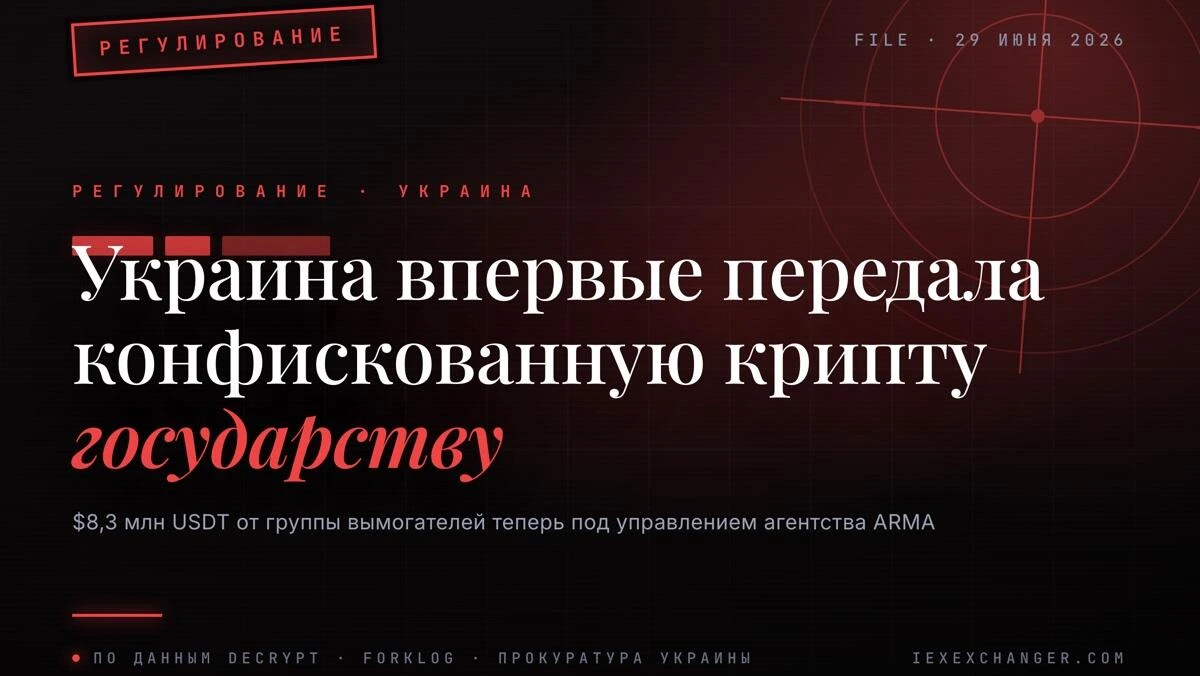
Ukraine's State Bureau of Investigation and Prosecutor General's Office transferred $8.3 million in USDT — seized from an alleged member of an international ransomware group — to ARMA, the National Agency for Finding, Tracing and Management of Assets. It's the first time in Ukraine's history that confiscated crypto has come under formal state custody, treated the same way as seized real estate or vehicles.
The case involves a cybercriminal group that targeted companies and individuals across Europe and the United States. The pattern was straightforward: steal confidential data, demand ransom, then launder the proceeds by buying property and cars in Ukraine. Estimated damages from the group's operations exceed $100 million. Four suspects are in custody, including the alleged ringleader. Total seized assets — homes, vehicles, and roughly $1 million in cash — amount to over $11.1 million.
What prosecutors emphasized wasn't the dollar figure but the legal milestone itself. "This is the first case when seized crypto assets have actually been transferred to the management of the state," the Prosecutor General's Office said. Previously, digital assets could be frozen in place, but the state had no formal role in holding or actively managing them once they were taken off the market.
ARMA already handles confiscated property in other criminal cases — apartments, cars, businesses. Adding cryptocurrency to that mandate closes a gap that's been visible in Ukrainian law enforcement. Stablecoins like USDT have become standard tools for cybercriminal money laundering precisely because they move across borders instantly and don't require conversion to cash. An agency that can hold and manage those assets — rather than just freezing them in legal uncertainty — is a functionally different kind of enforcement capability.