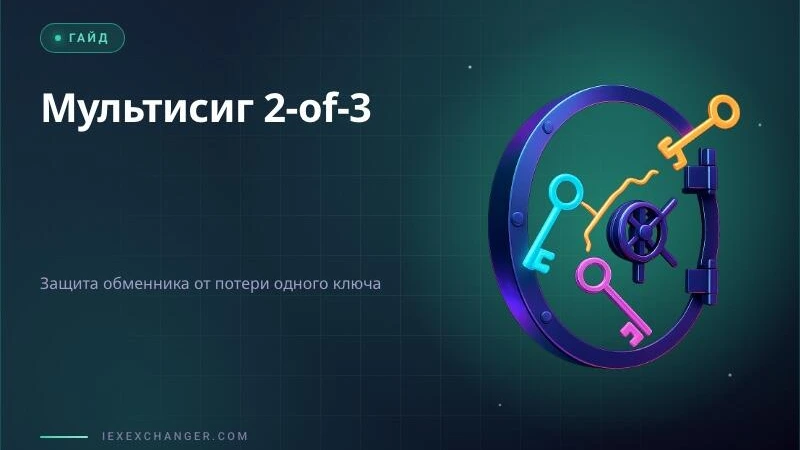
A multisig wallet is a cryptocurrency vault that requires multiple signatures to approve any transaction. Think of a bank safe with two locks: both keys must turn at the same time. For a crypto exchange operator, a 2-of-3 multisig setup is not a luxury — it is the sensible minimum: even if one key is compromised, your funds stay untouched.
Why a Single-Key Wallet Is a Business Risk
One private key means one point of failure. A hacked laptop, a stolen phone with a wallet app, a disgruntled employee walking out — any of these gives an attacker full access to your entire balance in seconds. Exchangers lose funds this way constantly: not through sophisticated exploits, but through one leaked key.
Multisig fixes this structurally. Each key lives in a different place, with a different person or on a different device. Moving funds requires at least two of three keys at the same time. One compromised key — nothing happens.
How 2-of-3 Works in Practice
In a 2-of-3 scheme, three keys are created and any two can sign a transaction. For a small exchange operation, the classic setup looks like this:
- Key 1 — operational: kept on a hot device for day-to-day transactions.
- Key 2 — backup: stored on a hardware wallet (Ledger, Trezor) with a second staff member or co-owner.
- Key 3 — emergency: kept in cold storage — an encrypted file in a bank safety deposit box or with a notary.
Day to day, keys 1 and 2 do the work. If the operator loses key 1, the 2+3 combination takes over. No single failure stops the business.
Three Mistakes That Kill the Whole Point
Most operators make the same three errors — and each one wipes out the entire purpose of multisig.
- All keys on one device. The reasoning is understandable: everything in one place is convenient. But that is not multisig — it is security theater. One breach gives an attacker all three keys simultaneously.
- Seed phrase backups stored next to the keys. Paper backup in the same safe as the hardware wallet? A single physical break-in gives an attacker everything they need in one visit.
- Recovery is never tested. An untested scheme is an unknown one. A good cadence: run a full recovery test once a quarter. It takes 20 minutes and could one day save your entire exchange balance.
When Multisig Will Not Help
Honest answer: multisig protects against key compromise, not everything. It will not save you if an operator signs a malicious transaction under social engineering. It will not help if a keylogger sits on the hot device and the attacker waits for the operator to enter the second key. And it does not replace a clear internal security policy.
Multisig guards against one person's mistake or one device's failure. That is enough to block the majority of real attack vectors on a small exchanger — but it is one security layer, not full armor.
Conclusion
Switching to 2-of-3 multisig is the cheapest and most effective security upgrade an exchange operator can make right now. No complex code, no expensive services: three keys, three storage locations, one clear policy. Do it once — and stop worrying that a single compromised laptop will wipe out everything you have built.
For exchangers that value independence from third-party custodians and middleman fees, iEXWallet offers a built-in non-custodial wallet as part of the exchange engine.