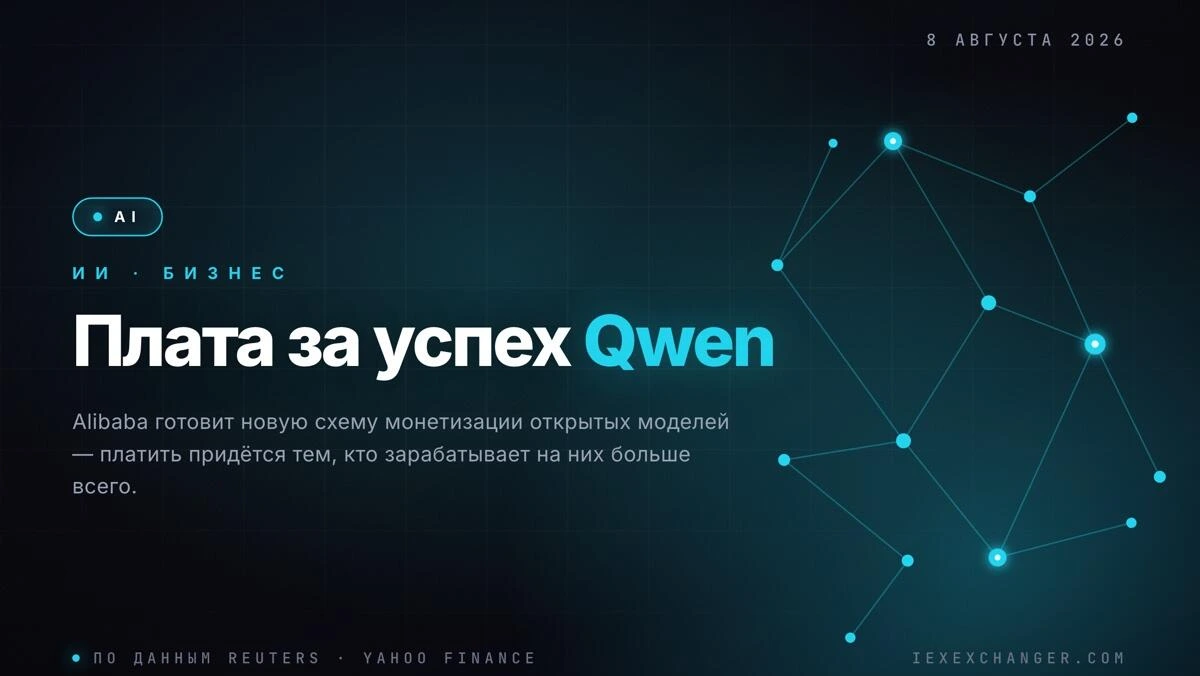
Reuters reported this week, citing two people familiar with the matter, that Alibaba is preparing a new monetization scheme for the next open-weight release in its Qwen family. Right now, Qwen3 models ship under an Apache 2.0 license — anyone can download the weights, fine-tune them, run them on their own servers, and even build a paid product on top, without owing Alibaba anything. That's about to change with Qwen3.8-Max.
Qwen3.8-Max is the largest model Alibaba has ever open-sourced: 2.4 trillion total parameters, with roughly 95 billion active on any given request thanks to a mixture-of-experts design. Under the plan being discussed, large companies that resell access to the model as a service and generate meaningful revenue from it would need to sign a separate commercial agreement that includes a cut for Alibaba. The exact percentage hasn't been settled — negotiations are still ongoing.
The idea isn't new in China's AI industry. Rival lab Moonshot AI already runs something similar for its Kimi K3 model: once a partner's combined revenue from reselling the model crosses $20 million over twelve months, a mandatory agreement kicks in, and Moonshot's cut can reportedly reach 30%. Chinasoft International and DigitalOcean are among the companies said to have already signed such deals.
Until now, Alibaba mostly made money from Qwen through its own cloud platform — charging for API access while letting anyone run the open weights elsewhere for free. Investors seemed to like the shift: Alibaba's shares jumped 4.5% in premarket New York trading and nearly 7% in Hong Kong after the report broke.
For the wider open-source AI community, it's a signal worth watching. If China's biggest labs start charging exactly where a model actually makes money for someone, "free" open weights may keep their price tag only until they stop being a hobby project.