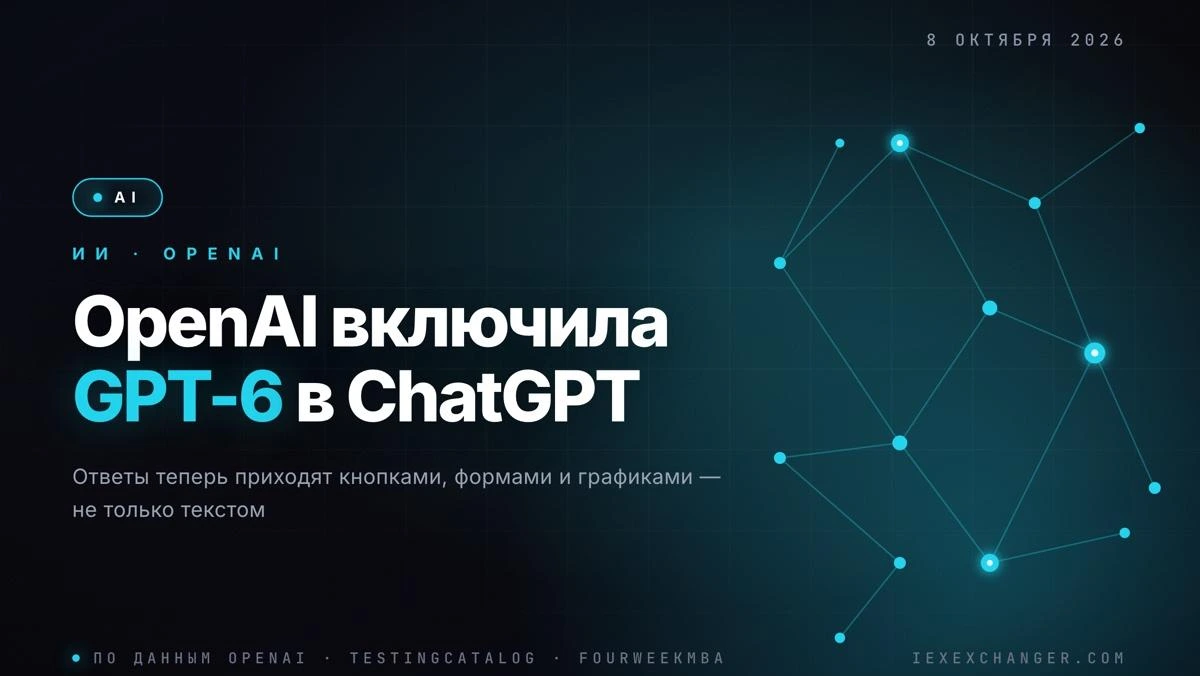
On October 7th, ChatGPT stopped answering in text alone. OpenAI flipped the switch on GPT-6 for paying subscribers, and with it came Intelligent UI — a feature that builds replies out of buttons, forms, charts and mini-tools instead of paragraphs.
It sounds like a cosmetic tweak, but given the audience — more than 1.2 billion people use ChatGPT every week — this counts as one of the largest interface experiments software has ever run. Ask it to split a restaurant bill and you get a working calculator with input fields, not a wall of instructions. Ask it to compare phone plans and you get a table with toggles. OpenAI says the system decides on the fly whether plain text will do or an interactive element is needed, assembling the interface through an internal compiler while the model is still generating its answer.
The rollout is staggered by tier. Plus, Pro, Business and Enterprise got GPT-6 Sol on October 7th; Free and Go followed a day later with the lighter GPT-6 Luna. The Work and Codex tools stay on the older model for now, and Enterprise access depends on workspace admin settings. On the measurable side: GPT-6 Instant starts answering web-search questions 44% faster on average than GPT-5.6 Instant, and the heavier Extra High tier for agentic tasks now runs about as fast as the old mid-tier model.
For OpenAI this isn't just a model bump — it's a bid to reshape what a conversation with a chatbot even looks like, in a race with Google and Anthropic that has mostly played out through price cuts over the past year. Sam Altman wrote that he'd "been waiting for this one for a long time" and would "hate to have to go back" to the old text-only format.
One question is still open: who decides which interface a given user sees, and whether picking the response format becomes another lever for pushing paid features or partner services. OpenAI hasn't detailed the logic behind which components get shown.