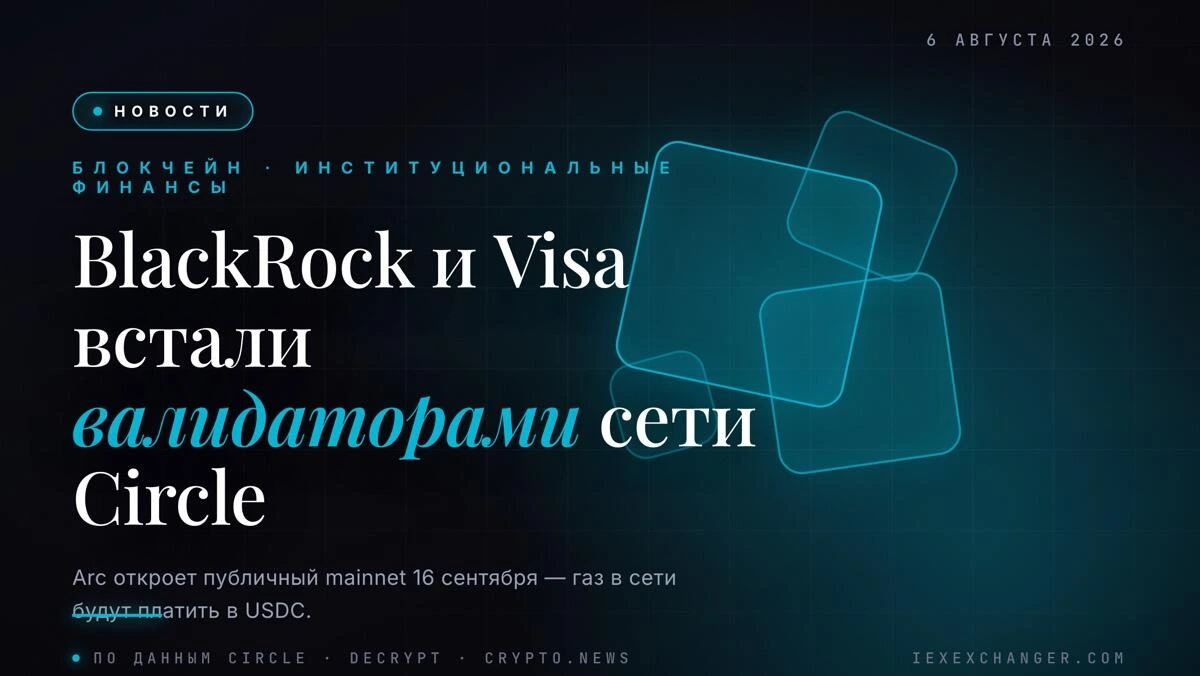
A couple of years ago, a blockchain's validator list usually meant hobbyists running home servers and a handful of crypto funds. Circle's new network looks nothing like that: BlackRock, DTCC, Visa, Mastercard, ICE, Standard Chartered, Galaxy, Global Payments, MoneyGram, SBI Group and Sumitomo Corporation. Eleven financial heavyweights, not miners.
This is Arc, a layer-1 blockchain Circle — the issuer of the USDC stablecoin — built specifically for traditional finance. The public mainnet opens September 16, following nearly a year of private testnet operation that processed over half a billion transactions across almost three million wallets.
The key difference from most blockchains: gas fees on Arc are paid directly in USDC, not a separate native token. For a bank or fund, that removes a real headache — no need to hold a volatile asset just to send a transaction. The network is EVM-compatible and promises sub-second transaction finality, faster than a typical interbank wire.
BlackRock has already confirmed it will deploy its tokenized money market fund BUIDL on Arc. DTCC, the central depository handling the bulk of US securities settlement, plans to bring tokenization of its custodied assets onto the network — though not before the second half of 2027. DeFi protocols Aave, Uniswap and Morpho are lining up for launch day, with wallet access through Binance Wallet, Kraken, Ledger and MetaMask.
There's an obvious tension with crypto's original pitch here: a network secured by eleven regulated financial institutions rather than a distributed pool of anonymous miners isn't decentralization in the traditional sense. For banks, though, that's precisely the point — accountable legal entities beat an unpredictable validator set. Circle is betting on that trade-off, and it isn't alone: several other major payments players have spent the past year building similar institutional chains of their own.