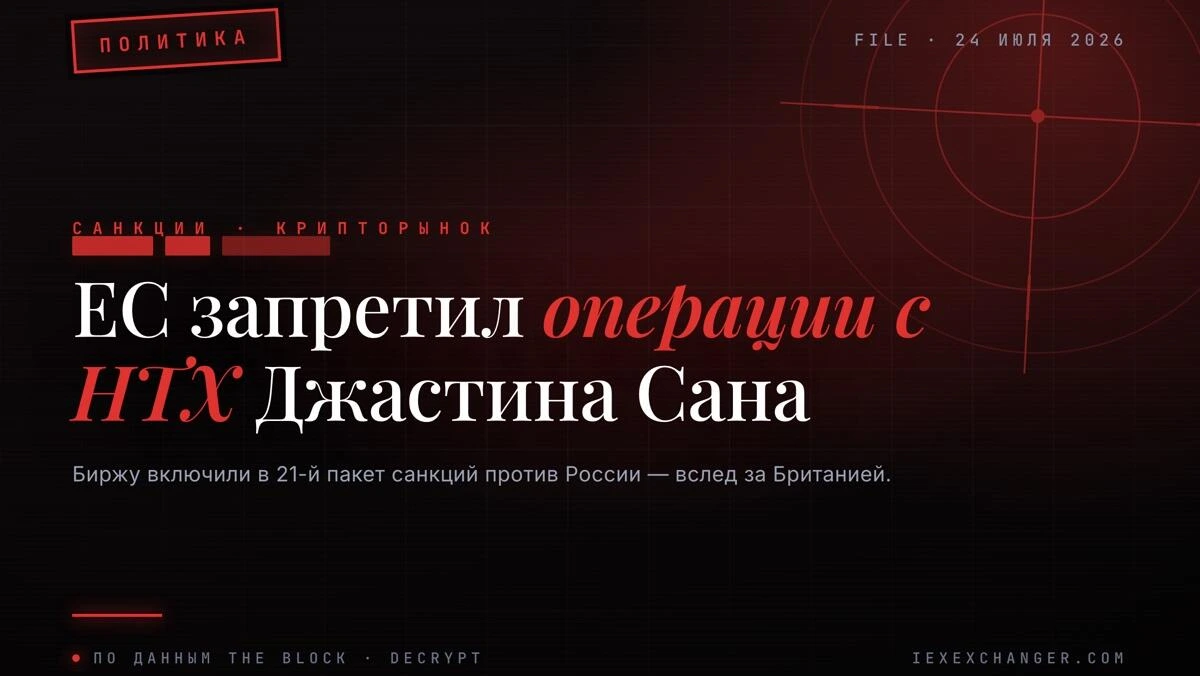
The European Council added crypto exchange HTX — formerly Huobi — to its 21st sanctions package against Russia on July 23. Starting August 23, EU residents will be barred from transacting with the platform; Brussels says HTX helped Russian users dodge financial restrictions imposed over the war in Ukraine.
This isn't an asset freeze — it's a transaction ban, a lighter measure than a full account lockdown. HTX was listed as a firm "significantly frustrating" the sanctions regime. The package as a whole covers 14 crypto platforms and 218 listings in total, spanning companies, banks and individuals.
HTX is run by Tron founder Justin Sun. He settled an SEC fraud case for $10 million earlier this year and previously partnered with Trump's World Liberty Financial project before the relationship soured into litigation.
HTX rejects the accusations. Wallet activity flagged by the EU reflects "routine, security-driven platform operations," the exchange says, adding that Huobi Global S.A. — the entity named in the sanctions list — is legally distinct from the HTX exchange people actually trade on. User funds, it insists, remain safe.
The UK sanctioned HTX first, back in May — the first time London targeted a crypto exchange of this size — estimating that over $1.5 billion had flowed to the Kremlin through the platform. The EU move essentially catches up two months later, with more listings attached.
The open question is whether a transaction ban without an asset freeze actually bites. HTX is already leaning on the split between the sanctioned legal entity and the exchange itself, which leaves room to keep operating through other corporate layers.