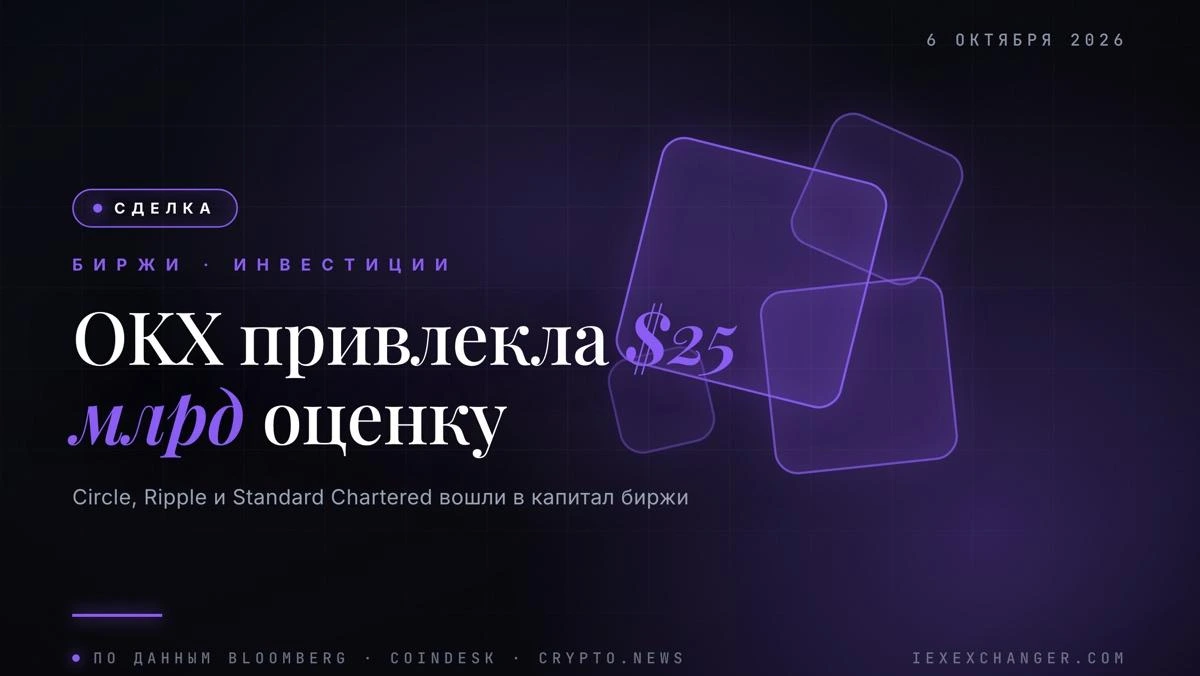
OKX just pulled off a second strategic raise in seven months, and the lineup of backers tells you where the exchange thinks the next few years of crypto are headed. Circle, the issuer of USDC, has joined alongside Ripple, quant trading firm Qube Research & Technologies, and SC Ventures, the venture arm of Standard Chartered. The round values OKX at $25 billion — the same mark it hit in March, when Intercontinental Exchange, the parent of the New York Stock Exchange, bought in and took a board seat.
Nobody is saying how much changed hands this time. But the choice of investors isn't random: each one already does business with OKX. Circle supplies USDC liquidity across spot and margin markets. Ripple's RLUSD now trades through a unified order book on the platform. And Standard Chartered custodies BlackRock's tokenized Treasury fund BUIDL, which OKX accepts as collateral from institutional clients.
Founder Star Xu put the pitch in plain terms: the exchange was the starting point, and OKX is becoming a place where customers can "hold, spend, invest and grow their money" without leaving the platform. That means payments and traditional assets moving onto blockchain rails, not just crypto trading.
The timing lines up with a bigger move. The same week, OKX and ICE filed paperwork with the SEC for a joint venture offering round-the-clock trading in tokenized shares of 63 U.S. companies, settled in USDC, USDT and USDG on OKX's own X Layer blockchain. Token holders keep dividend and voting rights — so this isn't a synthetic derivative, it's meant to track the real stock as closely as possible.
Macquarie's analysts aren't convinced institutions will rush in. The SEC exemption underpinning the project is temporary, which makes it a shaky basis for big funds to rebuild their back-office systems around. Early adoption, the bank's analysts argue, is more likely to come from retail traders than from Wall Street.