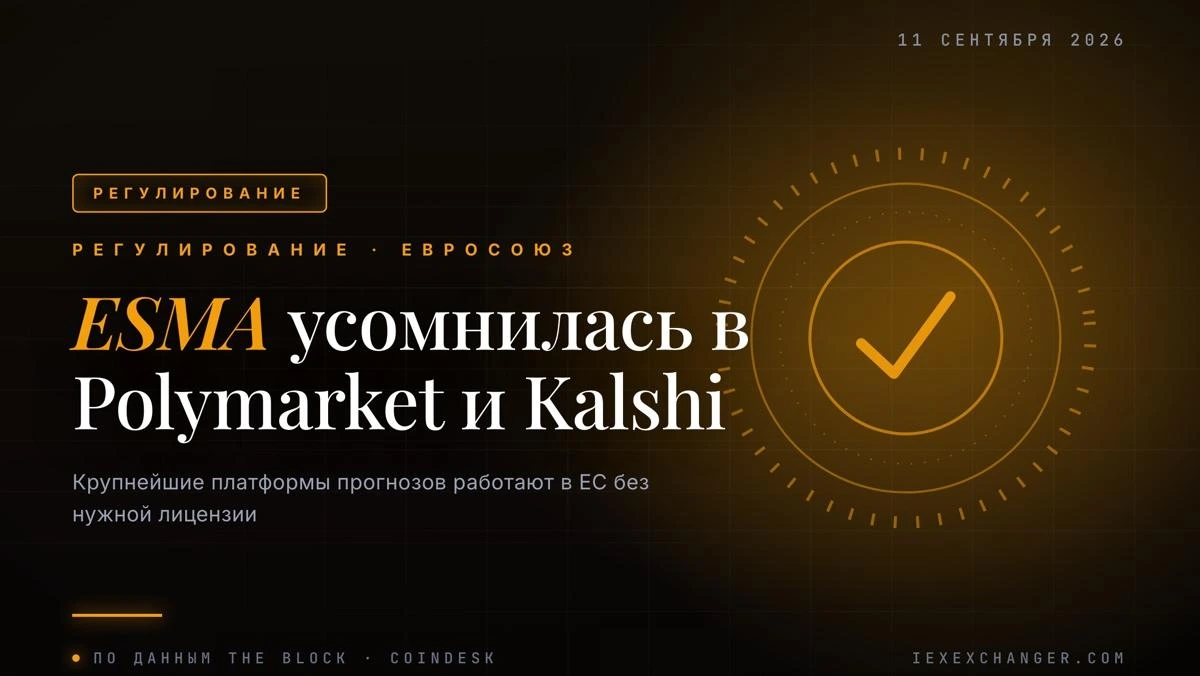
Europe's top markets watchdog just told the two biggest prediction-market platforms, in effect, that their access to EU users rests on shaky legal ground. In a quarterly risk report released on September 11, the European Securities and Markets Authority (ESMA) said Polymarket and Kalshi are marketing event contracts to EU residents without holding the authorization the bloc generally requires.
The core problem is that nobody has settled which rulebook applies. A contract betting on an election outcome or a sports result could be treated as a financial derivative under MiFID II — triggering the EU's outright ban on selling binary options to retail investors — as a blockchain-based crypto-asset under MiCA, or simply as gambling under national law, which varies wildly across 27 countries.
Both exchanges already block some EU markets. Polymarket shuts out Germany, France, Italy and the Netherlands; Kalshi's terms list Belgium, Bulgaria, Hungary, Ireland, Italy, Poland, Portugal and France. The lists don't match, don't cover the whole bloc, and — as ESMA pointedly noted — mean little if users can dodge geo-blocks with a VPN.
The regulator also flagged a harder problem: anonymity. Limited identity checks and pseudonymous trading, especially on Polymarket, make insider trading and manipulation tough to catch. Both platforms have already had to respond to real cases — Kalshi permanently banned former congressman George Santos over contract manipulation, and Polymarket has since tightened its own insider-trading rules.
ESMA stopped short of naming penalties or a deadline; this is a warning shot, not an enforcement order. But for platforms already fighting to be treated as legitimate exchanges rather than glorified betting sites in the US, Brussels just made clear that Europe's gray zone is closing.