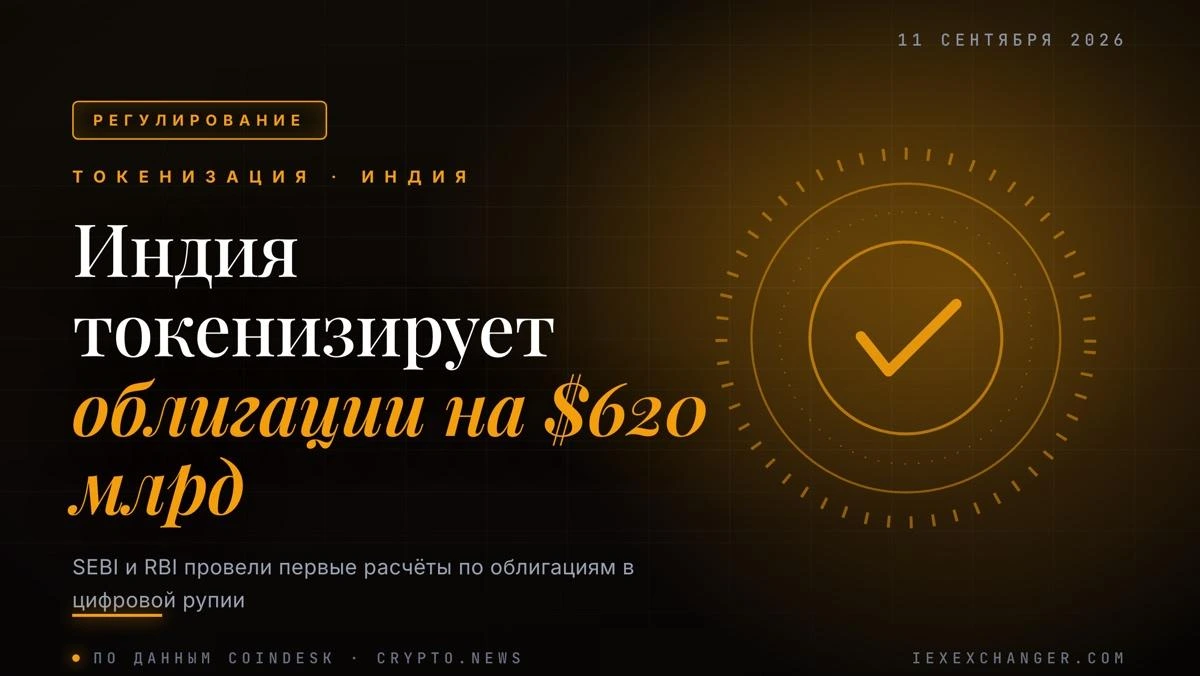
India's securities regulator SEBI and the Reserve Bank of India ran their first live trades this week under Demat 2.0, a pilot that turns corporate bonds into digital tokens settled with the RBI's wholesale digital rupee — the central bank's own CBDC. The target market is worth roughly $620 billion.
On September 7, state-owned power lender REC sold ₹500 crore (about $57 million) worth of bonds to 18 investors. Two days later, engineering conglomerate Larsen & Toubro raised another ₹500 crore from four investors, and non-bank lender IIFL Finance added ₹25 crore from a single buyer. Combined, the three deals moved roughly $116 million across 23 investors.
The real change is how settlement works. Under the old system, issuers waited two to three days to receive funds after an auction, because the bond and the payment moved through separate rails — leaving room for one leg of the trade to fail while the other went through. Demat 2.0 ties both legs into a single transaction over the RBI's Unified Market Interface: the tokenized bond and the digital-rupee payment change hands at the same moment. Coupon payments and redemptions run through smart contracts that release funds to investors' wallets automatically on the due date.
The bonds themselves stay ordinary. Interest rates, maturities and investor rights are unchanged, and holders keep using their existing demat accounts — no new wallet, no fresh identity check.
What's missing is just as telling as what's there. Unlike BlackRock's, DTCC's or Goldman Sachs' tokenization efforts, which run on public chains such as Ethereum, India's version stays entirely inside regulated plumbing — banks, depositories and central-bank money. There's no role for open blockchains or private stablecoins; this is a bet on CBDC rails, not on decentralization.
The scale so far is modest — $116 million against a $620 billion market — and SEBI hasn't set a timeline for secondary trading or retail access, saying each phase will inform the next. Still, for the world's largest emerging-market debt pool, it's the first real test of whether central-bank-token settlement actually beats the usual chain of intermediaries on speed and cost.