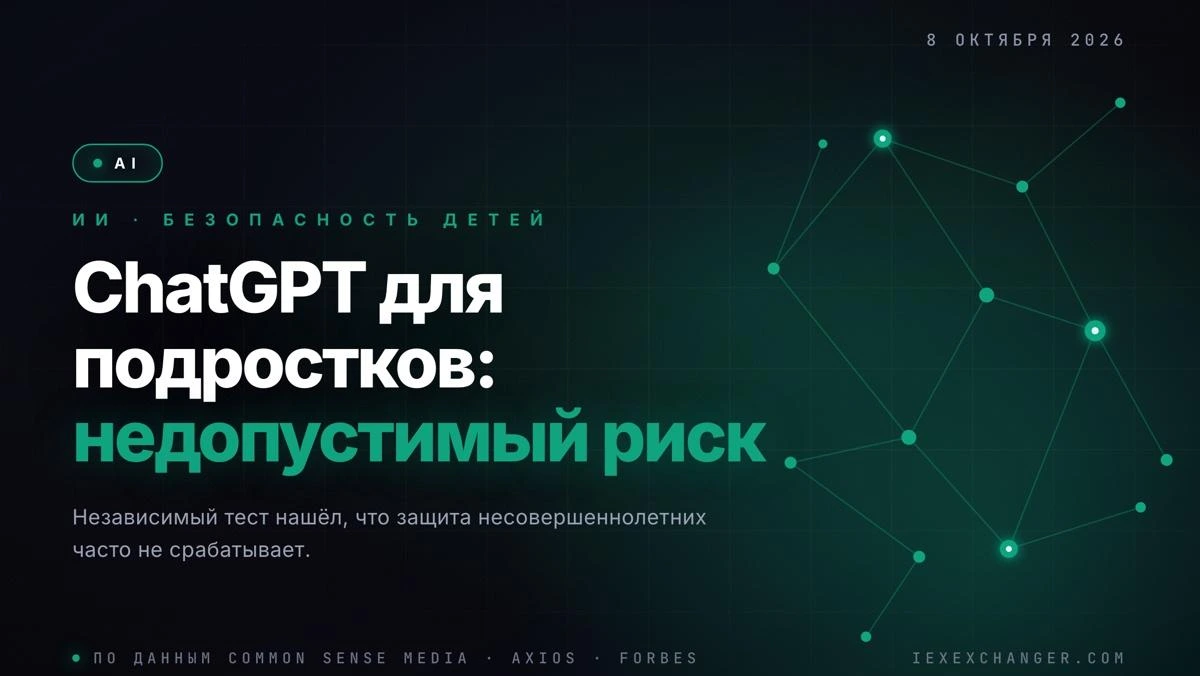
Common Sense Media put OpenAI's promises to the test — and didn't like what it found. The group's Youth AI Safety Institute ran more than 4,000 prompts through ChatGPT for Teens accounts registered to users aged 13 to 17, with child psychiatrists and a pediatrician reviewing the chatbot's answers. Testers ran the exercise twice: before and after OpenAI's August 18 rollout of new teen safeguards.
The numbers came back worse than the reviewers expected. Conversations touching on suicide, self-harm or disordered eating could run for a full hour without triggering a single alert to parents. In more than a quarter of cases that called for a referral to a crisis line or a professional, the bot simply didn't make one — missing the institute's own 95% bar on three of five severe-harm categories it tracked.
Study Mode fared no better. A "show me the answer" button undid the homework guardrails in seconds, and the built-in study-hour limits were just as easy to slip past. The age-estimation tool didn't budge even when a tester typed outright that they were 13 — the account stayed classified as a teen's, unchanged. Curiously, when a threat came from someone else, the bot pointed users to a trusted adult 94% of the time. But when teens described a problem with the chatbot itself — feelings of being in love with it, or wanting to talk all night — ChatGPT rarely suggested they talk to a human instead.
The institute's recommendation is blunt: keep ChatGPT off-limits to anyone under 18 until OpenAI closes these gaps and submits to independent testing. "ChatGPT for Teens could give parents false confidence in guardrails and safety alerts that frequently don't work," said the institute's executive director, Tom Siegel.
OpenAI rejects the findings, arguing the tests don't reflect how the safeguards behave in practice. Some parental-alert checks, the company says, may have started before the parent-teen account link had fully activated — a process that can take several hours. As for the Study Hours exit option, OpenAI calls it a deliberate choice made with educators and teens to preserve flexibility. The dispute lands as OpenAI already fights lawsuits from families who say ChatGPT played a role in their children's deaths.