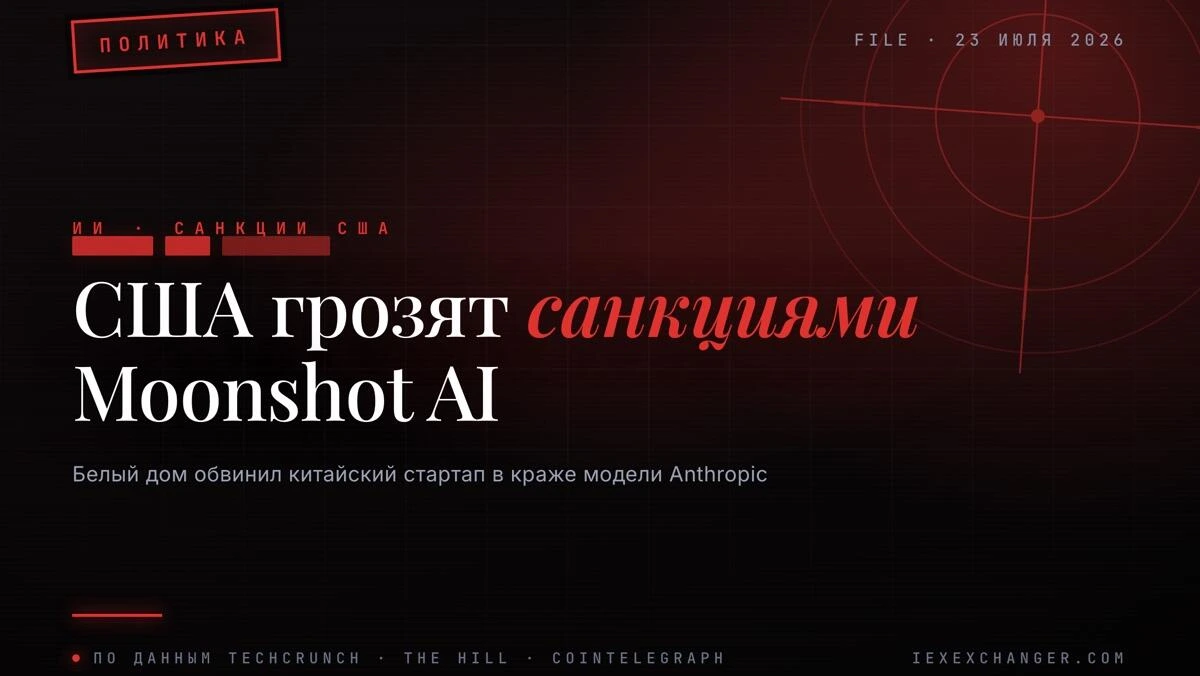
The White House has accused Chinese AI startup Moonshot of illegally leaning on Anthropic's technology to build its Kimi K3 model. The claim came from Michael Kratsios, the White House's science and technology policy chief, who said Moonshot ran an industrial-scale "distillation" operation — a technique where a rival's model is bombarded with queries so its answers can train a copycat, cutting years and billions of dollars off the R&D bill.
Anthropic says Moonshot pushed more than 3.4 million queries through fake accounts against Claude Fable, a model that's only been public since July 1, harvesting reasoning, coding and tool-use skills. Kratsios went further, alleging Moonshot got its hands on Nvidia GB300 servers in Thailand — the same Blackwell-generation chips Washington has barred from sale to Chinese firms.
Treasury Secretary Scott Bessent didn't hold back. "Open source is not open season on American IP," he posted, warning that sanctions and Entity List blacklisting are "on the table" for firms running "covert, industrial-scale distillation attacks." For Moonshot, that would mean getting cut off from American chips and technology entirely.
There's a hole in the timeline, though, and independent researchers have flagged it: K3 was already turning heads with strong benchmark scores shortly after launch, while Fable has only been public for three weeks — arguably too short a window for distillation on the scale Kratsios describes. That casts doubt on the White House's version, even if it doesn't answer the separate question of how Moonshot got restricted chips into its hands.
The spat fits a bigger pattern: Washington and Beijing aren't just racing on model quality anymore, they're fighting over who gets to train on whom. If the accusations turn into actual sanctions, it would be the first time the US formally punishes a Chinese AI company specifically for stealing a model, not just for touching banned hardware.