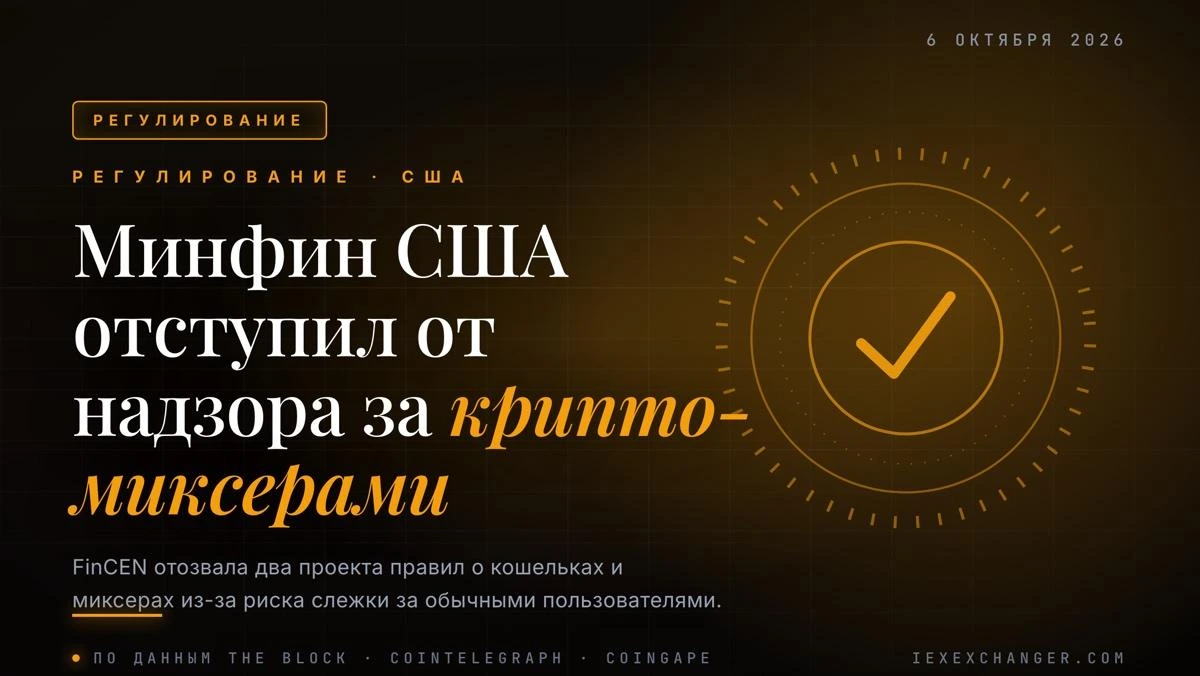
The US Treasury has decided to let two of its own long-threatened rulemakings quietly die. On October 5, FinCEN — the department's financial-crimes watchdog — announced it was withdrawing proposals from 2020 and 2023 covering self-hosted wallets and so-called crypto mixers.
The first proposal dates back to December 2020, in the final weeks of Trump's first administration. It would have required banks and other financial firms to verify the identity of recipients on transfers above $3,000 to wallets controlled directly by users rather than an exchange. The second, from 2023, went further: it proposed labeling international crypto mixing a 'primary money laundering concern' under Section 311 of the Patriot Act, with mandatory reporting of wallet addresses, transaction hashes, and even IP addresses.
Neither rule was ever finalized, so nothing changes in terms of current law — anti-money-laundering obligations, sanctions compliance, and suspicious-activity monitoring all stay exactly as they were. But removing the threat itself sends a signal. FinCEN acknowledged that the mixing proposal's broad definition would have caught more than criminals laundering stolen funds — it also swept in ordinary users relying on privacy as a basic blockchain feature, say, to keep their holdings from being visible to anyone who looks up their address.
Coin Center, an advocacy group that has fought the Treasury in court over related issues for years, called the 2023 rule's definition 'extraordinarily broad' — it covered things as mundane as splitting a payment into parts or timing a transfer with a delay, techniques plenty of law-abiding users rely on for basic privacy.
The move fits the current administration's stated preference for narrower, targeted digital-asset rules instead of wide nets that catch everyone. FinCEN wasn't closing the book entirely, though: it said it will keep watching mixer use tied to illicit finance, just without these specific rules on the books. Targeted investigations and address freezes — the kind used against North Korean hacking groups — aren't going anywhere. What got scrapped was blanket, automatic data collection on everyday crypto holders, not oversight itself.