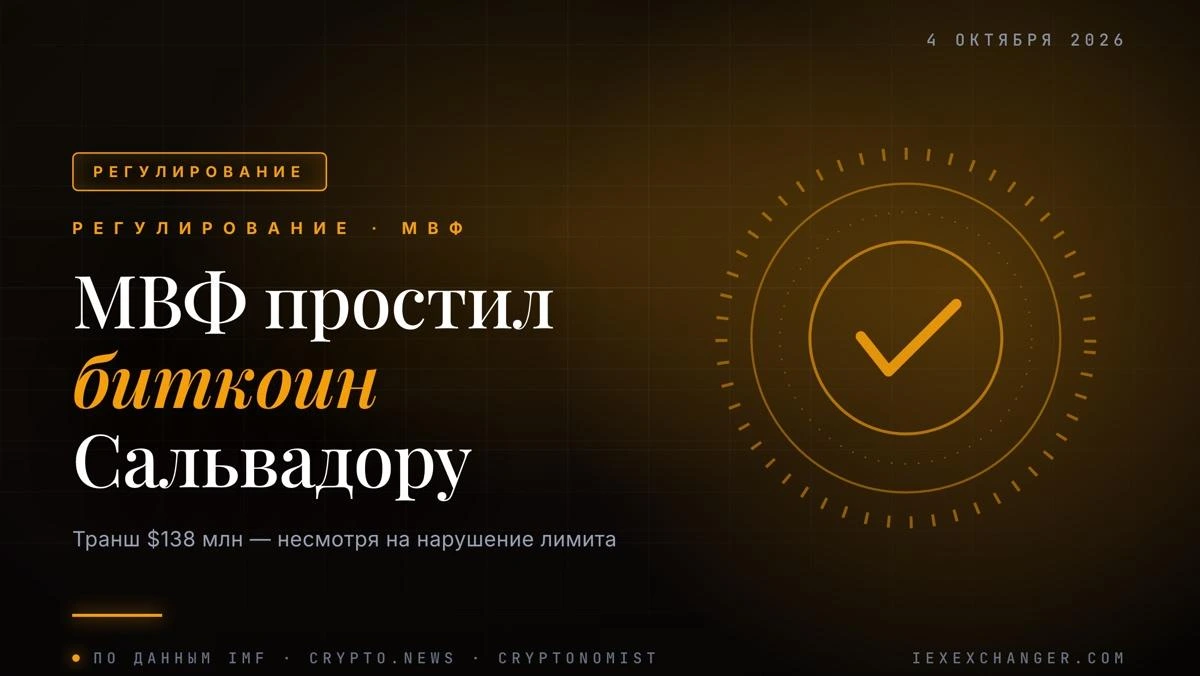
El Salvador bought more bitcoin than its IMF deal allowed — and got paid anyway. On October 1, the Fund wrapped up the second and third reviews of a $1.4 billion extended loan program and released SDR 101.96 million, roughly $138 million. The country had technically broken one of the deal's core terms: a cap on how much bitcoin the public sector could add. Rather than freeze the payout, the IMF's board waived it.
San Salvador's explanation: the new coins didn't come from the treasury, they arrived as private donations. The Fund accepted that story, even though it had previously flagged confusion between what the government reported and what was visible on-chain. As a backstop, Chivo — the state's bitcoin wallet operator — handed majority ownership and day-to-day control to a private operator, leaving the government with a minority stake.
This is an awkward spot for the IMF. For years it has pushed countries to stay away from crypto, and back in early 2025 its pressure was exactly why El Salvador stripped bitcoin of mandatory legal-tender status — the price of unlocking that same $1.4 billion loan. Now, instead of a hard no, the Fund has for the first time formally tolerated a sovereign government holding onto bitcoin, framing it as a manageable risk rather than grounds to tear up the agreement.
Deputy Managing Director Dan Katz signaled the patience has limits: the remaining state exposure should be "fully unwound," and oversight needs to tighten. For now, the private-donation defense works as a loophole that lets President Nayib Bukele keep adding bitcoin without technically breaking the letter of the deal. The economy, meanwhile, looks sturdier — the IMF raised its 2026 growth forecast to 4.5% from 3.9%, with reserves projected to climb to $5.35 billion.
This is the first time the IMF has officially looked past a sovereign's crypto accumulation. The precedent is a fragile one: if a donation loophole works once, it can work again — meaning any future crypto clause in an IMF loan agreement will mean exactly what the borrower can argue it means.