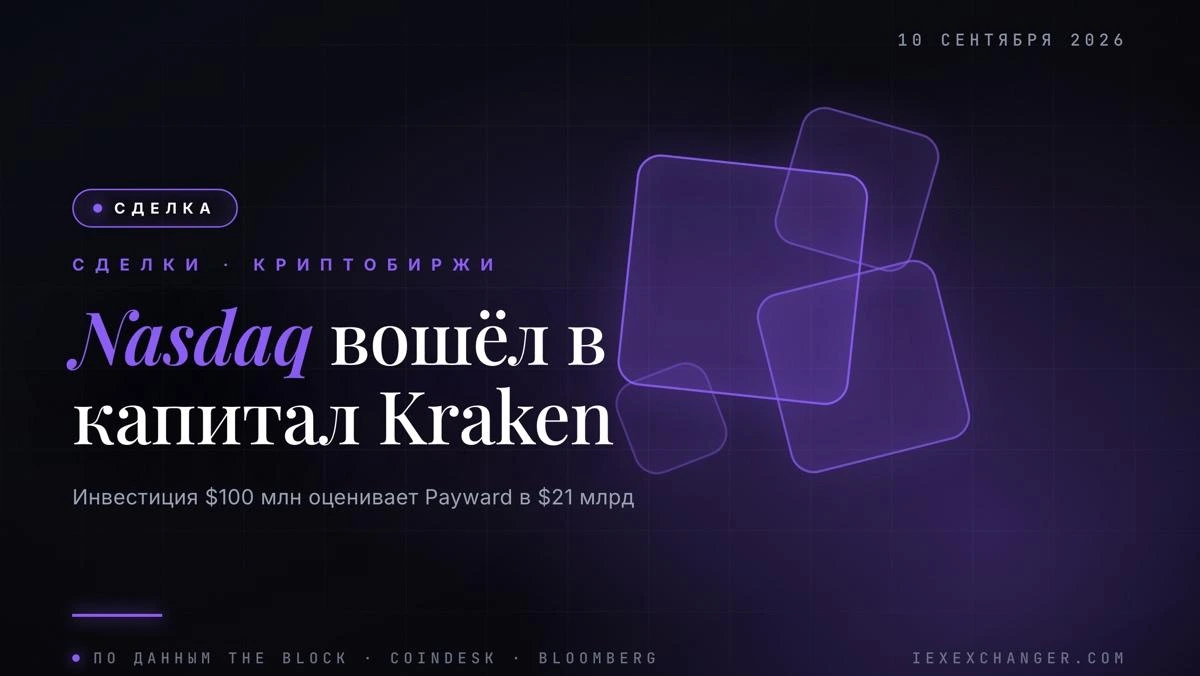
Nasdaq isn't content to just watch crypto exchanges edge into traditional finance — it's now buying a piece of one. The exchange operator has put $100 million into Payward, the parent company of Kraken, valuing the whole business at $21 billion.
The number matters less than the trajectory. Back in May, Payward was raising money at a $20 billion valuation, so the price tag climbed by a billion in four months, and Nasdaq is now on the cap table. The relationship isn't new: in March 2026, the two companies announced an "equity transformation gateway" meant to link regulated markets with blockchain rails.
Money aside, the deal reshapes how Payward runs its business. It will adopt Nasdaq's market surveillance technology across every venue it operates — crypto, equities, tokenized equities, futures and options. Together, the firms are also pushing forward Nasdaq Equity Tokens, or NETs: blockchain versions of Nasdaq-listed shares that carry the same voting rights as the underlying stock. Unlike a normal share, a NET could trade around the clock, with no market close and no clearing-window wait. Kraken is set to become one of the platforms distributing these tokens once they launch, targeted for the second quarter of 2027.
"More than $2 trillion of stock trades run through the U.S. clearing system every day," said Arjun Sethi, Payward's co-CEO. "Onchain settlement removes the wait."
Wall Street's tokenization race is already crowded. NYSE, through ICE, is building its own round-the-clock venue for tokenized stocks and ETFs with tZERO, and the DTCC has picked the Stellar blockchain for its own pilots. What's still unresolved is how a NET holder's voting rights hold up legally if a dispute lands in court, and whether U.S. regulators are ready to treat this as a real market rather than a sandbox.