
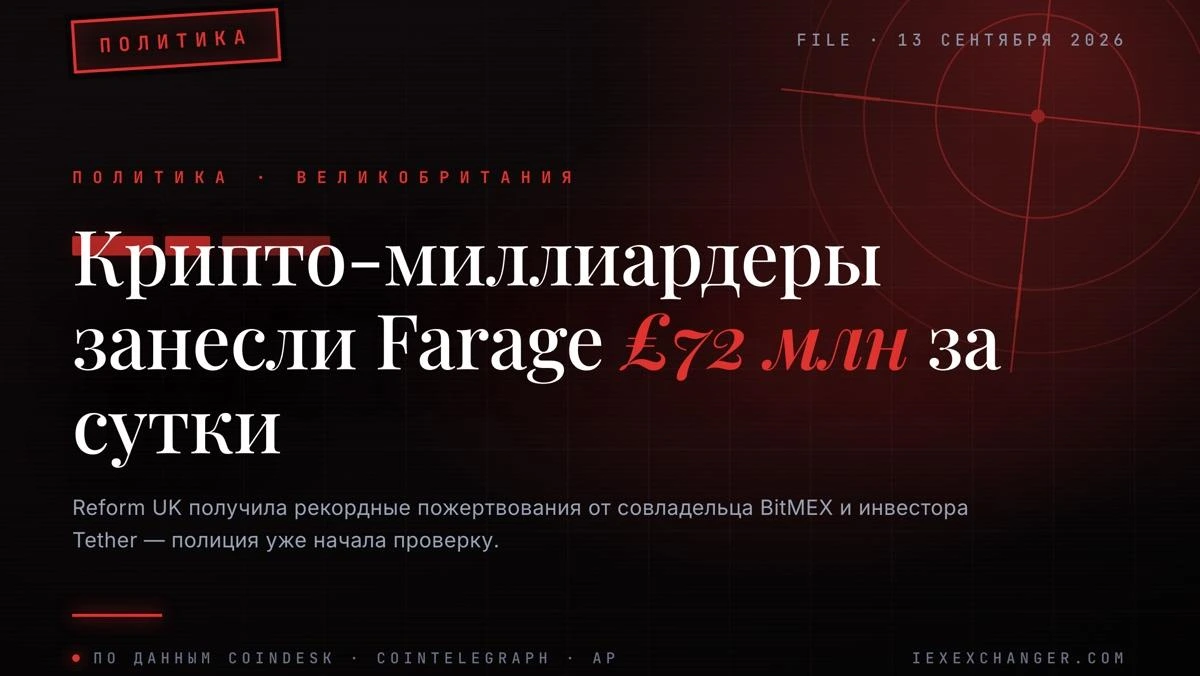
Over a single weekend, Nigel Farage's party raised more money than some British parties collect in an entire year. It started when BitMEX co-founder Ben Delo wired Reform UK £36 million — paid in one lump sum rather than installments, specifically so regulators couldn't block it partway through. A day later, Christopher Harborne, an early backer of Tether and Bitfinex, matched him with another £36 million. Total haul: £72 million, roughly $97 million, in 24 hours.
The size isn't the only striking part. Harborne was already Farage's biggest donor — he gave £12 million in December, and together with Delo accounted for 76% of Reform UK's declared donations in the first quarter of 2026. His stated reasoning is straightforward: he believes the party's policies will pull investment into Britain and fund healthcare and education. "What do I expect in return? Nothing. No peerage, no policy change — just a party ready for government," he said.
The catch is that UK electoral law only allows parties to accept donations from British voters or UK-registered companies. Harborne is technically eligible to vote in Britain, but he's based in Thailand and has run his business through offshore structures for years — a pattern already under separate parliamentary scrutiny over an earlier £5 million personal gift to Farage. Delo, for his part, received a presidential pardon from Donald Trump in March 2025 over Bank Secrecy Act violations tied to running BitMEX — not exactly a typical donor résumé.
London's Metropolitan Police has now opened a review into Reform UK's funding, and rival parties are warning about wealthy backers effectively buying elections. There's an irony here: the government announced plans back in March to ban crypto-asset donations outright and cap foreign contributions at £100,000 a year — precisely the kind of maneuver Delo and Harborne just carried out. Until that rule actually passes, money wired in pounds rather than tokens stays technically within the law.
For Farage, this is above all about building a war chest ahead of an anticipated early election — he's already promised voters a bitcoin reserve at the Bank of England and a 10% capital gains tax on crypto. But the faster Reform UK's coffers fill with money from people who got rich on crypto, the louder the question gets: where's the line between backing a party and buying its future stance on crypto regulation?