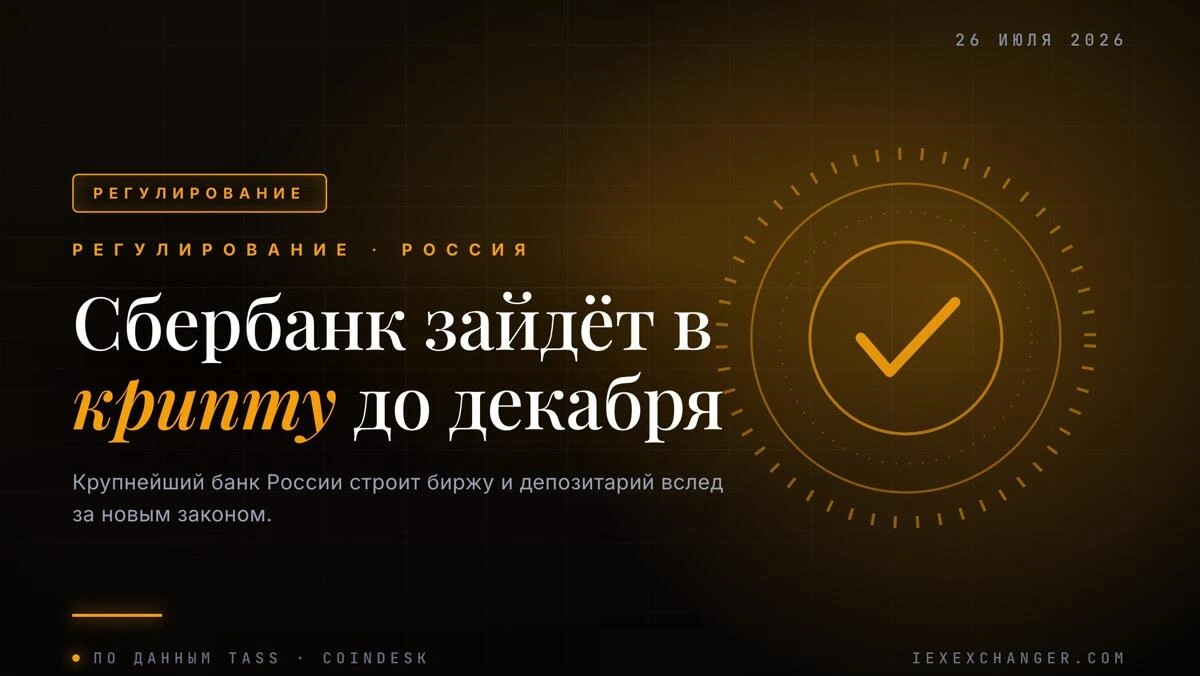
Sberbank, Russia's largest bank, says it will build its own crypto trading infrastructure and launch a digital depository no later than December 1, 2026. First deputy chairman Alexander Vedyakhin called the country's newly passed crypto market law "an important step" for the industry.
The depository will record who owns what crypto and settle most transactions off the underlying blockchain, effectively making Sberbank both broker and custodian at once rather than simply handing clients a wallet with private keys. Deposits, withdrawals and transfers are meant to run through an interface that looks like ordinary online banking.
The law behind this move takes effect September 1: from that date, crypto trading in Russia has to go through licensed brokers, exchanges, asset managers and depositories, with a stricter rule mandating licensed intermediaries only kicking in from July 2027. The list of coins allowed on public exchanges is narrow, though. The central bank will only admit assets with an average market cap above 5 trillion rubles (roughly $64 billion) and daily turnover above 1 trillion rubles (about $12.8 billion), sustained over two years — a bar only a handful of cryptocurrencies clear. Paying for goods and services in crypto inside Russia stays banned, and only qualified investors get access to a wider range of assets.
This isn't Sberbank's first move into the space. It has been registered as an information-system operator since 2022, started offering qualified investors bitcoin- and ether-linked structured bonds and digital financial assets in 2025, and wrapped up a bitcoin-collateralized lending pilot with miner Intelion Data in December 2025.
What nobody has explained yet is how a state-adjacent depository plans to source real liquidity on global crypto markets when Sberbank itself sits under Western sanctions and its access to foreign exchanges is limited. For the Kremlin, though, the setup solves two problems at once: a legal channel for crypto settlement, and a complete paper trail of who holds what — anonymity clearly isn't part of this version of a crypto market.