
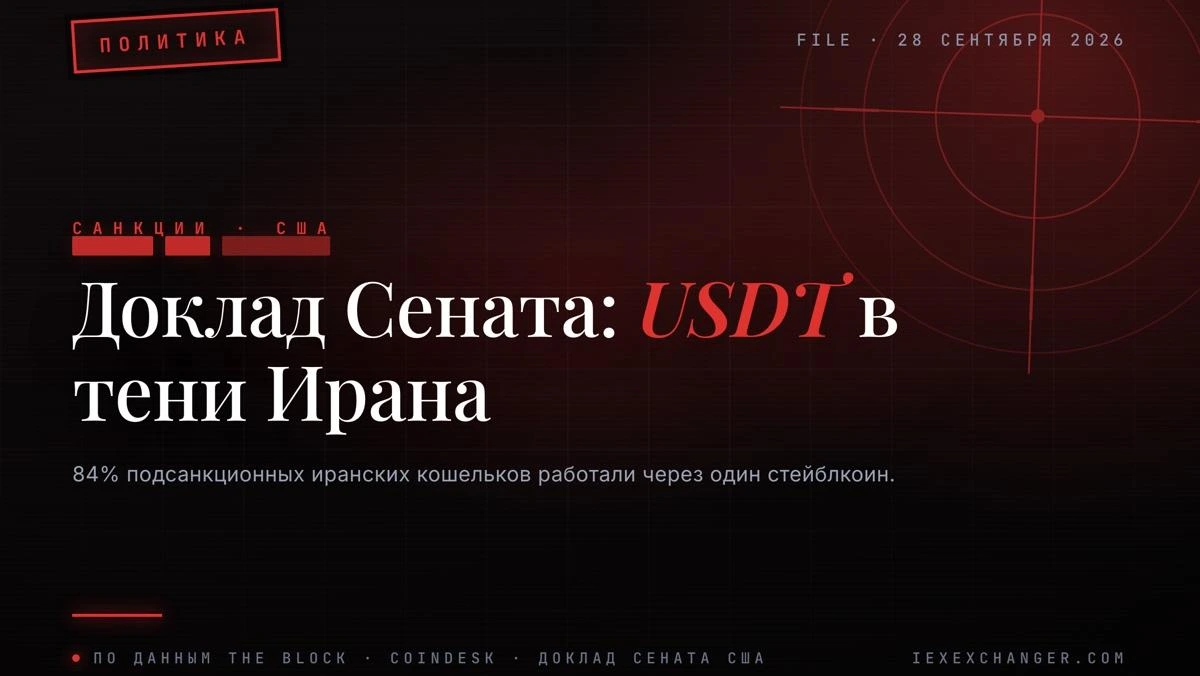
On Monday, the U.S. Senate's Permanent Subcommittee on Investigations released a 28-page report arguing that Tether's USDT has become the backbone of Iran's shadow financial system. The document, written by Democratic staff under ranking member Richard Blumenthal, is based on blockchain analysis of 846 sanctioned crypto wallets tied to Iran and its regional allies.
One number stands out: 84% of those wallets moved money almost exclusively, or entirely, through USDT. The authors say funds from this network helped pay for drones and other military hardware, and that Tether didn't consistently freeze sanctioned addresses before 2024 — acting selectively and often late.
Blumenthal doesn't mince words. He says the report shows how Tether and its token became central to Iran's shadow banking system, letting Tehran fund regional proxies, commit human rights abuses, and pursue drone and missile programs. The report also flags a broader shift: groups like Hamas are increasingly favoring USDT over bitcoin, drawn by its deep liquidity and heavy use on Iranian exchanges.
Tether pushes back hard. The company says it froze roughly $550 million in Iran-linked USDT over the past year and works closely with law enforcement. CEO Paolo Ardoino insists USDT "is not a haven for sanctioned actors, terrorist organizations or criminal networks."
There's a political wrinkle too. The report notes that Commerce Secretary Howard Lutnick previously ran Cantor Fitzgerald, the firm that custodies Tether's reserves, while Bo Hines — a former Trump crypto adviser — now heads Tether's U.S. business. Democrats call that worth a closer conflict-of-interest look. The timing matters: this lands right as Congress fights over stablecoin rules, handing ammunition to lawmakers pushing for tighter oversight of issuers.