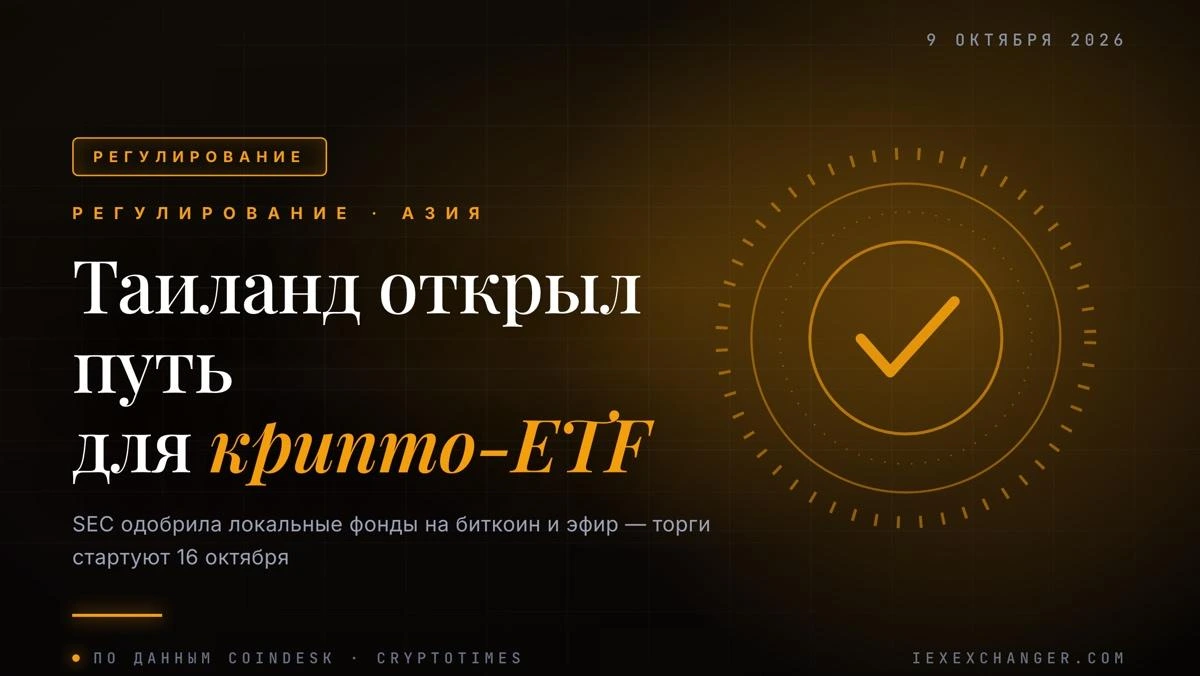
Thailand's Securities and Exchange Commission issued eleven new rules on October 8, clearing the way for local asset managers to launch exchange-traded funds that hold bitcoin and ether. Trading on the Stock Exchange of Thailand is set to begin October 16.
The fine print is strict. Each fund has to run passively and keep at least 80% of its net assets in a single approved coin — for now, that means bitcoin or ether, chosen for their liquidity, market acceptance, network security and investor-protection track record. Custody has to sit with a locally licensed digital-asset custodian; foreign custodians aren't on the table yet. Brokers can't offer margin loans to buy into these funds, mirroring the rule already in place for spot crypto trading on exchanges.
A second set of rules squeezes foreign products. The SEC is temporarily blocking depositary receipts tied to overseas crypto ETFs and stopping brokers from pitching those funds to ordinary retail clients — only institutions and ultra-wealthy investors keep that door open. The regulator's reasoning is blunt: give the local market room to grow and strengthen Thai fund managers, rather than let demand flow abroad. Thai mutual and private funds, meanwhile, can now put money into domestic crypto ETFs for the first time; previously they were limited to foreign ones.
Before buying in, investors have to complete an education module and confirm they understand the risks. That's not a box-ticking exercise — Thailand has the highest per-capita crypto adoption rate in the world, around 20%, ahead of the roughly 13% in the US, and regulators are clearly wary of speculative money chasing a product most people don't fully understand.
For Thai asset managers, the new rules are a shot at winning back customers who'd otherwise buy bitcoin directly on exchanges or through foreign funds. For everyday investors, it's a more supervised way to get crypto exposure without managing a wallet or private keys.