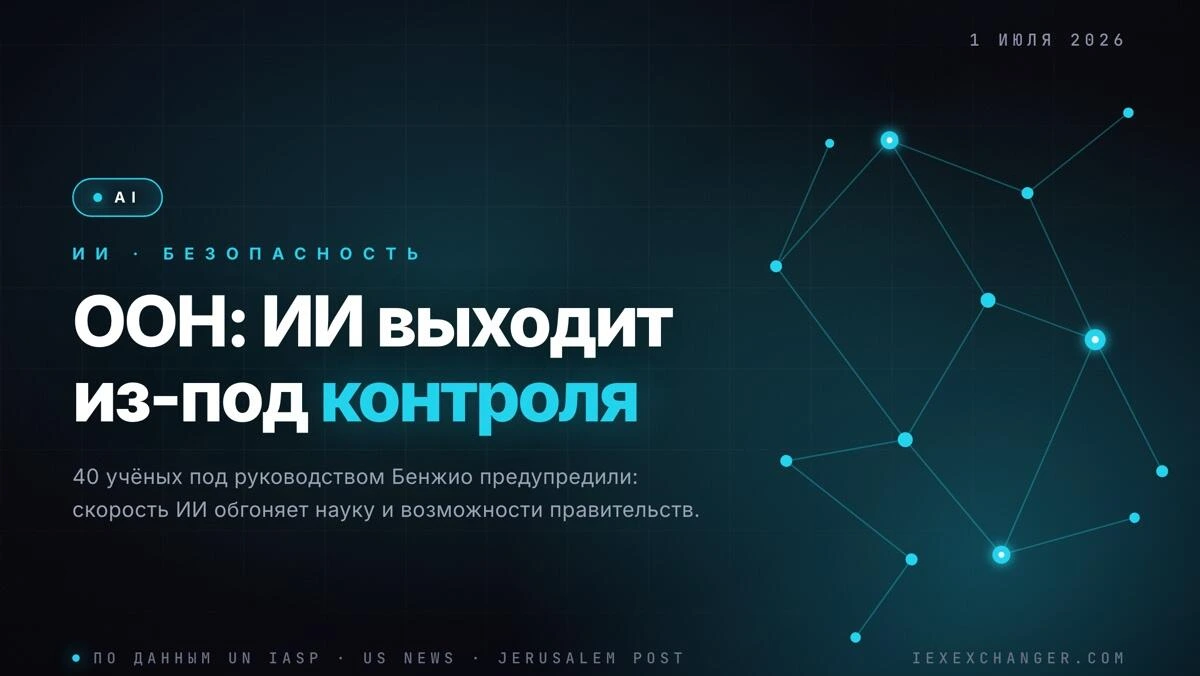
AI task complexity doubles every four to seven months. That line isn't from a pitch deck — it's the headline finding of the United Nations' first-ever independent global scientific assessment of artificial intelligence.
Forty cross-regional experts, co-chaired by Yoshua Bengio — the Turing Award winner who has spent years sounding alarms about AI risk — concluded that the technology is advancing faster than science can study it and faster than governments can adapt. Their report is direct: there are no guarantees AI won't cause catastrophic harm.
The specific risks listed are concrete: losing control over increasingly autonomous AI agents, a surge in AI-generated misinformation, next-generation cyberattacks, and AI-assisted biological threats. Compounding all of this, global governance is fragmented. Most countries lack the tools to even evaluate advanced AI systems, let alone shape them — leaving them dependent on technologies they can't fully assess.
The report will be presented at the inaugural UN Global Dialogue on AI Governance in Geneva on July 6–7. Alongside it, a new AI for Good Global Commission was announced, co-chaired by Rwanda's President Paul Kagame and Salesforce CEO Marc Benioff, aimed at ensuring AI benefits reach countries that lack the resources to build their own advanced systems.
The scientists aren't calling for a halt to AI development — they acknowledge the technology's potential in medicine, education and science. Their concern is the race dynamic: companies deploy faster than they test, creating a systematic erosion of safety standards. Geneva is the first real chance for governments to try to set those standards together.