
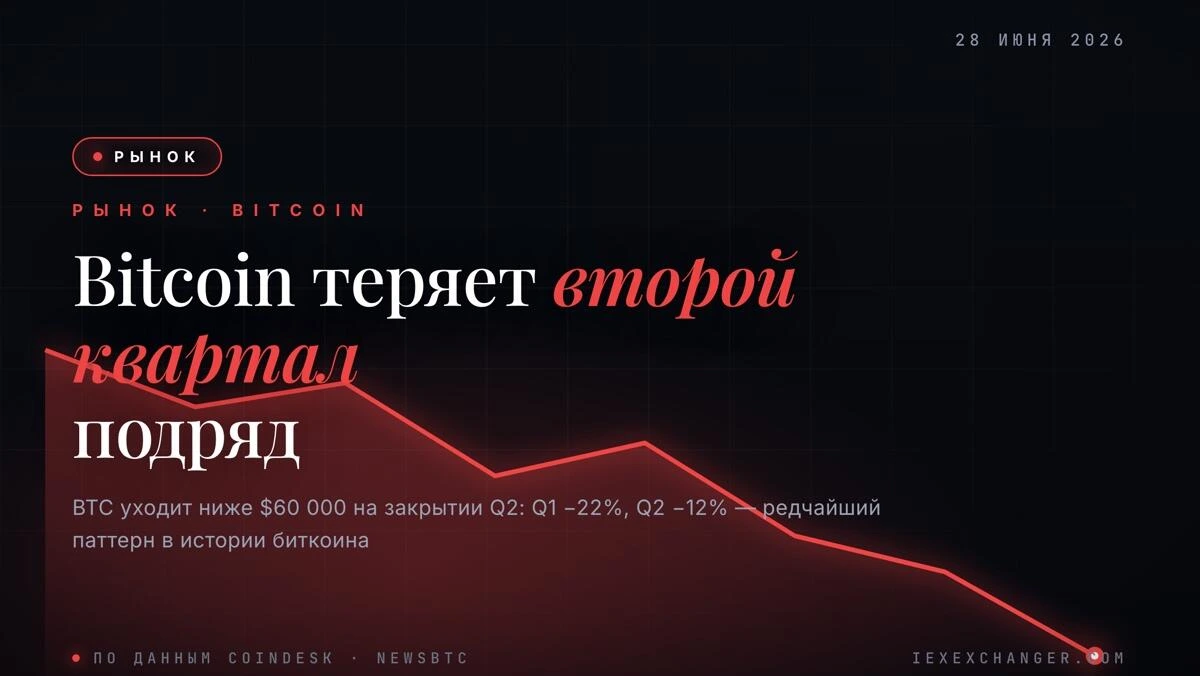
Bitcoin is wrapping up the first half of 2026 with an unwanted distinction. The second quarter ends with BTC down roughly 12%, following a 22% drop in Q1. Back-to-back losing quarters to open a calendar year has happened only twice in Bitcoin's full history, according to data tracked by CoinDesk. On June 28, the price sits below $60,000.
The timing matters because Q2 has historically been one of Bitcoin's better stretches. Over the past decade, the second quarter averaged gains for the asset. This year, that seasonal pattern simply didn't hold.
Three forces explain the slide. U.S. spot Bitcoin ETFs posted persistent outflows throughout the quarter: the average IBIT investor is sitting roughly 40% below their peak entry point, and last week ranked as the second-worst for net outflows on record. The Federal Reserve kept rates elevated while the futures market began pricing in further hikes — a clear signal that cheap money is not coming back anytime soon. A strong dollar compounded the pressure; historically, when DXY climbs, appetite for risk assets fades across the board.
Altcoins fared worse than BTC. Ethereum dropped about 25% in Q2. XRP, Dogecoin, and HYPE all posted double-digit weekly losses. Solana and Tron held up somewhat better in relative terms, though both remain well below their early-2026 highs.
What Q3 brings is the question traders are sitting with. July has historically been a positive month for Bitcoin, and short positioning is elevated enough that any catalyst could trigger aggressive short covering. But a durable recovery requires at least one of the three headwinds to break: ETF flows need to turn positive, the Fed needs to shift its tone, or the dollar needs to soften. Right now, none of those things look imminent — which makes July more of a stress test than a starting gun.