
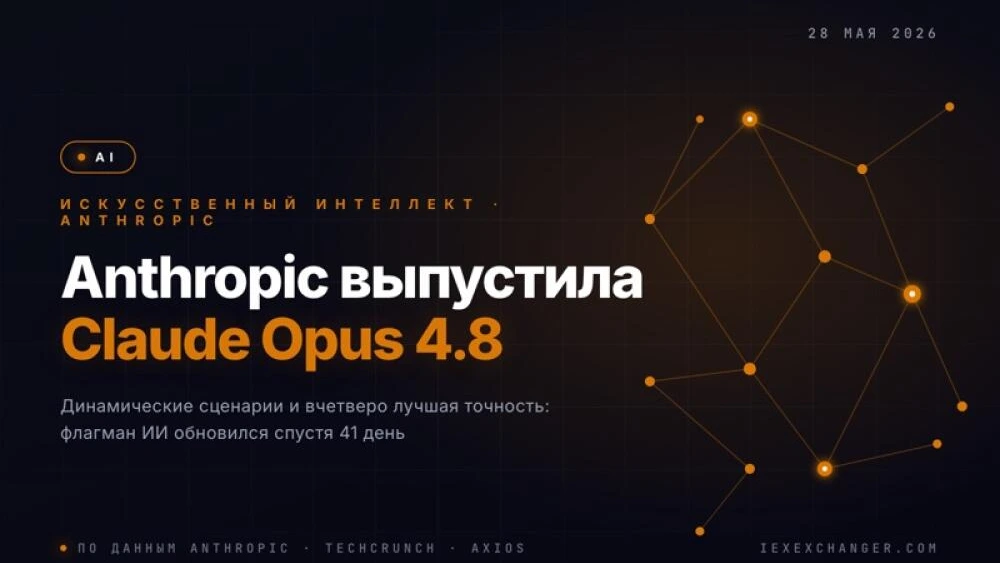
On May 28, 2026, Anthropic released Claude Opus 4.8 — the latest iteration of its most capable model — just 41 days after the previous version. Two headline improvements: dynamic workflows for large-scale tasks and a fourfold reduction in undetected code bugs.
What Happened
Anthropic launched Claude Opus 4.8, describing it as having "sharper judgment, more honesty about its progress, and the ability to work independently for longer than its predecessors." The 41-day turnaround from Opus 4.7 is notably fast for a frontier model update, suggesting the company's development cadence is accelerating.
Key Changes
The standout new feature is dynamic workflows in Claude Code. The model can now decompose large projects into subtasks, sequence them, and execute them without repeated user prompts. Anthropic says this unlocks project-scale work that previously exceeded a single session's scope.
Benchmark gains versus Opus 4.7:
- Agentic coding: 64.3% to 69.2%
- Multidisciplinary reasoning with tools: 54.7% to 57.9%
- Agentic computer use: 82.8% to 83.4%
- Knowledge work score: 1,753 to 1,890
The most striking number: the model is now four times less likely to let code bugs pass undetected.
Why It Matters
For Claude Code users, dynamic workflows change day-to-day experience: instead of manually re-prompting to keep a large task on track, the model manages its own execution plan. Combined with substantially better code review accuracy, Opus 4.8 makes a strong case as the most capable agentic coding model Anthropic has shipped to date.
The economics improve too. Fast Mode is now three times cheaper than it was for Opus 4.7, while still operating at 2.5x standard speed. The core model pricing stays the same: $5 per million input tokens and $25 per million output tokens.
What's Next
The release also introduced effort controls on claude.ai — a setting that lets users choose how deeply Claude engages with a task, from a quick answer to a thorough deep-dive. It's an early sign that Anthropic is building toward behavioral customization that doesn't require prompt engineering.
At 41 days between versions, the release cadence sets a clear expectation: Opus 4.9 may arrive sooner than most expect. With $65B in fresh capital and an accelerating model schedule, Anthropic is clearly moving fast.