
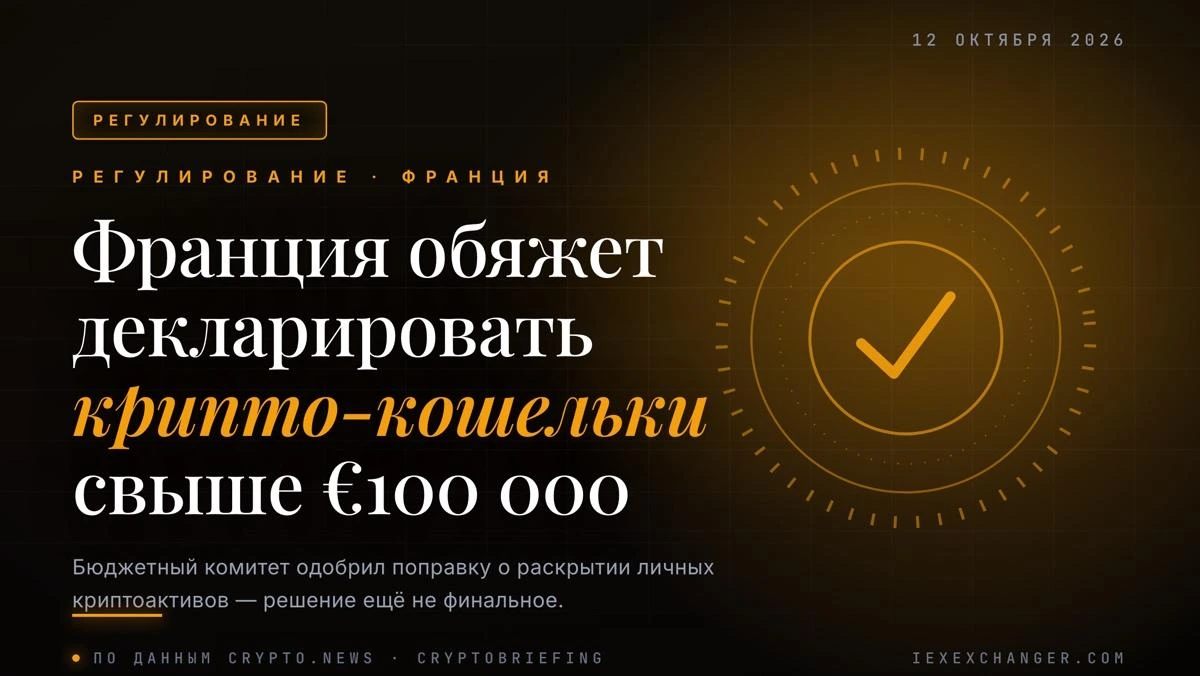
France is close to a new rule: anyone holding more than €100,000 in crypto in a personal wallet — not on an exchange, with no middleman — would have to report it to the tax office. Skip the filing and the fine can reach €10,000. The Finance Committee of the National Assembly approved the amendment, known as I-CF821, this week; its authors are deputies Charles de Courson, Jean-Pierre Bataille and Michel Castellani.
Until now the spotlight was on exchange accounts — French residents already have to declare crypto held with platforms at home or abroad. Wallets where the owner alone holds the keys slipped past the tax authority. The gap is substantial: a parliamentary inquiry found the French made €3.5 billion in crypto gains in 2021 but declared only €400 million. Roughly €3.1 billion went unreported.
Back in spring, lawmakers floated a much lower bar — just €5,000 — and it was voted down. The new threshold is twenty times higher, and that's deliberate: the authors point directly to a wave of attacks on crypto holders in France, where criminals weren't after exchange passwords but the wallets people hold personally. The lower a disclosure threshold sits, the easier it becomes for a thief to spot who's worth robbing.
The same package adds an exit tax: anyone moving holdings worth more than €800,000 abroad would owe a separate levy. None of it is settled yet — the committee also rejected the revenue section of the 2027 budget, so every crypto provision has to be reintroduced on the Assembly floor. That debate opens October 13, and the €100,000 line could still move before a final vote.
If it survives, France would become one of the first EU countries to specifically target personally-held wallets rather than exchange accounts — which puts the tension between tax enforcement and the physical safety of crypto holders squarely in front of its MiCA neighbors at the next round of rule-making.