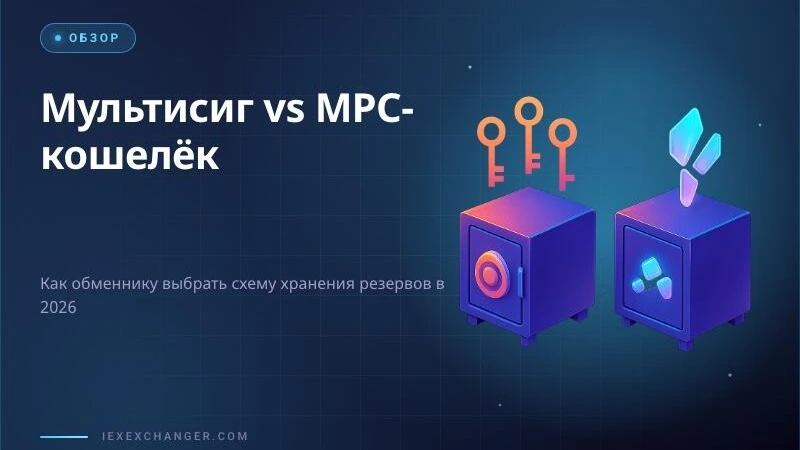
Multisig vs MPC wallet is a question every crypto exchanger eventually has to answer once real reserves are on the line. A multisig wallet needs several independent signatures to move funds; an MPC wallet splits a single key mathematically so no one ever holds the whole thing. The difference sounds technical, but it decides who can actually touch the money if something goes wrong.
Multisig: several keys, one vault
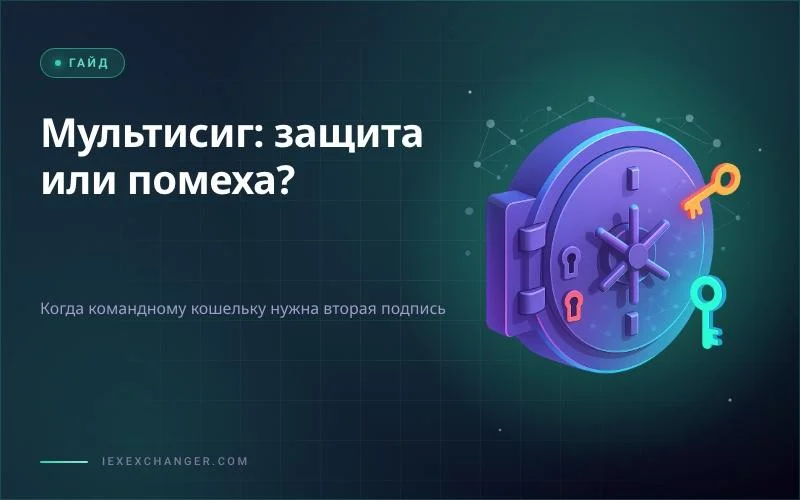
A multisig wallet requires a preset number of signatures to approve a transfer — say, 2-of-3 or 3-of-5. Picture a vault with three separate locks: any two keyholders can open it together, but no single person can walk in alone.
For an exchanger, that usually means one key with the ops lead, one on a hardware wallet in the office, and one in a bank deposit box for emergencies. Lose or steal one key, and the funds are still safe.
MPC: a key nobody ever sees whole
An MPC (multi-party computation) wallet works differently — there's no single private key to begin with. It exists only as fragments spread across several parties, who jointly sign a transaction without ever reassembling the key in one place. Think of a vault code known only in pieces by three people, never spoken aloud in full.
To the blockchain, it looks like an ordinary single-signature transaction. The network has no idea multiple parties negotiated behind the scenes.
Speed and convenience: MPC's edge
A multisig transaction is literally made of several signatures, and the chain sees every one of them — which means higher gas costs, especially on Ethereum, and everyone involved needs to be reachable at once. For a team spread across time zones, a routine transfer can stall for hours.
MPC settles as a single signature, so it's cheaper per transaction and behaves the same way across nearly any network — no need to run a different custody setup for each chain.
Security: two different risk models, not two different grades
With multisig, the risk sits with the keyholders: if enough of them collude or lose access, the wallet is locked or exposed. The upside is a decade of independent audits and real-world battle-testing — most of the bugs worth finding have already been found.
With MPC, the risk shifts toward the provider: a flaw in the cryptographic implementation or a breached coordination server can put every client's funds at risk at once, not just one wallet. The technology is younger, with fewer public incidents to learn from. That doesn't make it unsafe — it just means trust moves from blockchain math to a specific vendor's reputation.
What it actually costs to run
Multisig can be set up for free on open protocols, but every signer needs their own hardware wallet, and swapping out a key is a separate on-chain transaction with its own fee. MPC is usually sold as a subscription service — but key rotation happens off-chain, with no extra gas and no blockchain footprint at all.
How to choose: three questions, not one right answer
There's no universally correct setup — only the one that fits your team. Before deciding, answer these honestly:
- How many people actually hold keys, and across how many time zones — past two or three, multisig delays start to bite;
- Which networks hold most of your reserves — Bitcoin and most EVM chains support multisig natively, but less common chains can get messy;
- Whether anyone on your team can actually review an MPC provider's cryptography audit, rather than just trusting its marketing.
Common mistakes when switching
The biggest one: moving the entire reserve to a new setup at once, with no parallel testing period on a small balance first. The second: agreeing on a signature threshold on paper without confirming every keyholder can actually be reached the moment a transfer becomes urgent. The third: treating MPC as a replacement for cold storage — even with a split key, most of your reserve is safer offline.
Conclusion
Multisig and MPC solve the same problem — stopping one compromised key from draining an exchanger's reserves — through different means and different failure modes. Plenty of exchangers end up running both: cold multisig for the bulk of reserves, MPC for fast operational payouts. If building that architecture from scratch isn't appealing, iEXWallet, a wallet built for exchanger owners, already has both custody models in place — with no middleman fee.