A multisig wallet is one of the most practical tools for protecting funds in a crypto exchange. The idea is simple: instead of a single private key, several are required to authorize a transaction. Lose one — the funds are still safe. Steal one — withdrawal is still impossible without the rest. Sounds solid. In practice, though, many exchange owners configure multisig in a way that turns all that protection into an illusion.
How Multisig Works
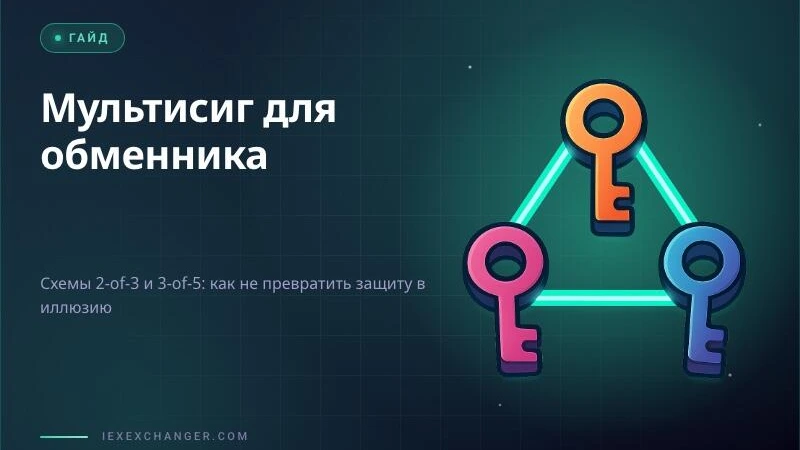
Think of a safety deposit box with two locks — it only opens when both keyholders show up together. A multisig wallet works the same way: a transaction only goes through once M out of N pre-assigned keys have signed it. The most common scheme is 2-of-3: three keys exist, and any two are sufficient.
For a crypto exchange, this matters more than for a personal wallet. There is constant transaction flow, multiple staff members, and real risk of the hot wallet being compromised. One stolen key is not a catastrophe — if multisig is in place. One stolen key without multisig, and the wallet is empty.
Three Schemes Actually in Use
- 2-of-2 — both keys required. Maximum protection against unilateral withdrawal, but if one key is lost or a device breaks, funds are locked forever. Nearly unworkable for a live exchange.
- 2-of-3 — the most popular option. One key with the owner, one on the exchange server, one in cold storage. Losing one is not critical. This balance is what makes the scheme practical for small businesses.
- 3-of-5 — for teams with several co-owners or senior managers. More resilience, but requires a clear policy: who signs, when, and who is responsible for what.
For most small exchanges, 2-of-3 is the sensible starting point. Adding complexity without a real reason means extra operational headache with no proportional gain in security.
The Biggest Mistake: All Keys in One Place
The most common blunder. An owner generates three keys and puts all of them on one laptop in different folders. Technically, multisig exists. In practice — no protection at all: one breach or lost device takes everything at once.
Keys must be physically separated:
- Hot key — on the exchange server in an HSM or encrypted container.
- Second key — on a hardware wallet (Ledger, Trezor) with the owner, in a different physical location.
- Third key — cold backup: printed copy in a safe, another city, or a trusted party.
Only when keys exist in different places under the control of different people or devices does multisig actually do what it promises.
When Multisig Won't Help
Honest answer: multisig doesn't protect against everything. If an employee controls two keys and decides to disappear with the funds — the scheme won't stop them. If the owner is under duress and forced to sign — same result. Multisig guards against technical breaches and single-key loss, not social engineering or insider collusion.
Another blind spot: regulatory freezes. AML blocks or sanctions have nothing to do with multisig — those problems are solved by compliance, not cryptography.
How to Set It Up Without New Risks
A few practical steps that reduce the chance of getting it wrong:
- Start on a testnet. Run the lost-key recovery scenario with test coins before moving real funds in.
- Write down the procedure. Who signs routine payouts? What happens if the owner is unreachable? Verbal agreements fall apart in the first real crisis.
- Choose a wallet with native multisig support: for Bitcoin — Electrum or Sparrow; for Ethereum — Safe (formerly Gnosis Safe). Homemade solutions without an audit are a risk not worth taking.
- Check keys on a quarterly schedule. Hardware devices break; backups corrupt. Verifying that everything is alive takes twenty minutes and could one day save the business.
Conclusion
A multisig wallet genuinely works — when set up correctly. A 2-of-3 scheme with keys stored in separate locations gives an exchange protection from technical breaches and single-key loss, without unnecessary complexity. It doesn't replace good operational practice, but it removes the sharpest risk: a single point of failure. If you're building or already running your own exchange, iEXWallet is a proprietary crypto wallet for exchange owners with no third-party commission.