Crypto Debit Cards in 2026: Threat to Exchangers or New Opportunity?
13 hours ago4 min.
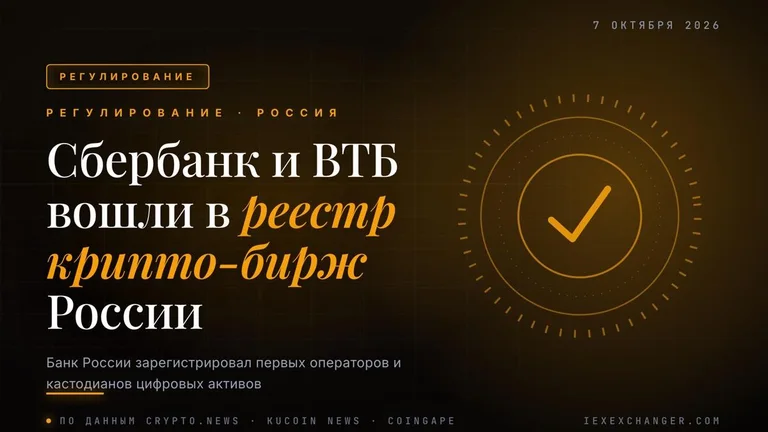
Igloo Inc., the company behind Pudgy Penguins, will shut down its Abstract blockchain on December 15 after 18 months of funding and tens of millions in losses. Users must move their assets before the deadline.
Igloo Inc., the company behind Pudgy Penguins, will shut down its Abstract blockchain on December 15 after 18 months of funding and tens of millions in losses. Users must move their assets before the deadline.

Russia's central bank named its first licensed crypto exchanges and custodians — Sberbank, VTB and six more firms. Retail buyers face a yearly cap, and Sberbank plans to launch trading on December 1.

The Cardano Foundation flipped on CIP-0113 on mainnet, giving issuers of stablecoins, bonds and funds built-in tools to run KYC checks, freeze accounts and seize tokens without the holder's consent.
Yield-bearing stablecoins like USDe and sUSDS blur the line between a payment tool and an investment product. Three scenarios for 2026, plus a checklist for exchangers deciding whether to list them.

In 2026 the list of crypto ETFs stretched far beyond bitcoin and ether. Here's how altcoin ETFs reshape demand, volatility and spreads — and what that means in practice for exchanger owners.
A stablecoin depeg looks like a headline to a trader but a hole in the balance sheet to an exchanger holding USDT or USDC. Four myths about depegs — and what protects exchanger reserves from a sudden drop.
A multisig wallet splits transaction signing across several keys under an M-of-N scheme. We look at who actually needs this protection, which setup mistakes cancel it out, and how it compares to MPC.

Passkey wallets let you unlock crypto with a fingerprint or face instead of a 24-word phrase. Here's how they actually work, who they suit, and which risks stick around once the paper is gone.

A hot wallet is the most exposed part of any crypto exchanger's stack: one forgotten token approval or a leaked key can empty it in minutes. Here are five common mistakes — and how to fix each one.