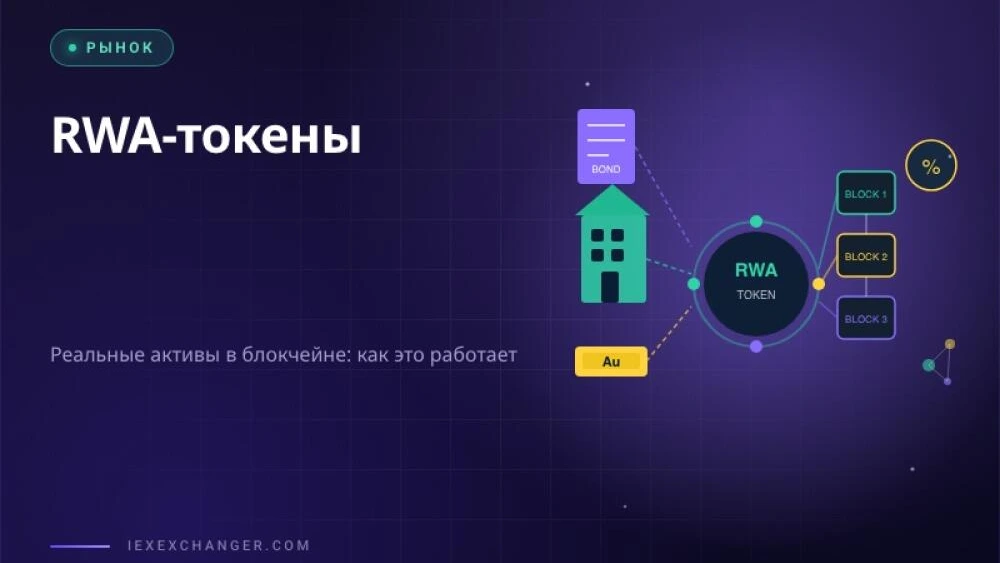
Real world asset tokenization means issuing digital tokens backed by physical or financial assets — real estate, bonds, gold, collectibles. RWA tokens let you transfer rights to those assets via blockchain: quickly, fractionally, and without traditional intermediaries. By 2026, this market has grown from a niche experiment into a full-blown DeFi segment.
What RWA Actually Means
RWA stands for Real World Assets. The concept is straightforward: take something valuable from the traditional world, wrap it in a legal structure, and issue a token on the blockchain.
A simple example: a $10 million building split into one million tokens at $10 each. Buy one token, and you hold a share of the property plus proportional rental income. Sell your token any time — no need to wait for a buyer for the whole building. That is the core value: fractionality, liquidity, speed.
Which Assets Are Being Tokenized Right Now
The RWA market is broader than it first appears. Here is what is actively moving on-chain:
- Government bonds — the largest segment: tokenized US Treasuries yielding in line with the current Fed rate.
- Real estate — residential and commercial properties held through SPV structures.
- Precious metals — gold (e.g. PAXG) backed by physical storage.
- Private credit — private lending funds accessible via tokens to qualified investors.
- Collectibles and art — niche but growing.
How RWA Tokens Differ From Regular Crypto
The key difference: an RWA token is pegged to something that exists outside the blockchain. Bitcoin lives only within its own network. An RWA token is a digital representation of something real — a building, a gold bar, a debt instrument.
This carries real consequences. The token value depends not just on crypto market sentiment but on the underlying asset itself. The issuer carries legal obligations — you need to scrutinize them like any fund manager. Regulators are also paying close attention: in several jurisdictions, tokenized securities are treated on par with traditional ones and require proper licensing.
Risks Worth Talking About More Honestly
RWA is not a silver bullet. Here is what can genuinely go wrong:
- Counterparty risk. If the issuer goes bankrupt or acts in bad faith, the underlying assets may be frozen. The token to SPV to asset chain only holds if the issuer is trustworthy.
- Liquidity. Secondary markets for most RWA tokens are still thin. Exiting a position without significant slippage can be hard.
- Regulatory uncertainty. Different jurisdictions classify these instruments differently, affecting both accessibility and compliance requirements.
- Oracles. Pricing data for the underlying asset enters the blockchain via external feeds — an error or manipulation here can distort the token value.
Conclusion
RWA tokens represent a genuine step toward making traditional assets accessible, fractional, and liquid. The market is growing fast — but the risks are equally concrete: choosing your issuer carefully and understanding the legal status of a token in your jurisdiction are non-negotiable. If you are building or scaling your own exchange and want to stay ahead of what clients are asking about, iEXExchanger offers a ready-made platform for launching and growing your exchange business.