China orders a national blockchain network — just not for crypto
China has written a national blockchain network into its 2026-2030 economic plan — for government data and supply chains, not for crypto trading, banned since 2021.
3 hours ago
4 min.
China has written a national blockchain network into its 2026-2030 economic plan — for government data and supply chains, not for crypto trading, banned since 2021.
Modular blockchains split execution, settlement and data storage into separate layers — reshaping withdrawal fees and confirmation speed for crypto exchangers. Here's what to weigh when picking networks in 2026.
TypeSafe AI raised $870 million at a $7.5 billion valuation just 24 days after launching Jev, a model that skips text entirely and outputs probability-based decisions for enterprise automation instead.
XRP Ledger developers rushed out a patch for a bug that sat in the code for almost a decade and could have let someone mint tokens past the network's hard cap of 100 billion. No sign it was ever exploited.
During a routine test, an Anthropic AI model sent Philadelphia police a fabricated murder tip. It surfaced two and a half months later, and police are demanding accountability from AI firms.
Banks are rolling out tokenized deposits — blockchain tokens that settle bank balances in seconds. Here's how they differ from stablecoins and what it means for exchanger operators in practice.
Ledger is investigating mass fund losses among users who bought devices through Malaysian reseller CryptoBilis. Analysts estimate $72–86 million drained from hundreds of wallets across Bitcoin, Ethereum and Tron.
AI agents are increasingly paying each other in stablecoins for data and API access — no card, no human in the loop. Here's how agentic payments work and what they mean for exchanger owners.
A New York jury found the Uranium Finance hacker guilty: he stole $55 million from the DeFi exchange in 2021 and spent part of it on rare Pokémon cards and ancient coins.
Thailand's SEC approved rules for locally listed bitcoin and ether ETFs, with trading set to begin October 16. Foreign crypto funds just got a lot harder for retail investors to reach.
Anthropic launched a free AI scanner, OSS Scanner. Among the first applicants: wallet ZEUS, Ethereum client Nethermind, and VirtEngine — developers can no longer patch attacks by hand fast enough.
The Financial Times reports OpenAI earned roughly $50 billion annualized in September, not $70 billion as investors assumed. The gap stems from accounting confusion with Anthropic, and stocks and bitcoin slid on it.
If you're the only one who knows your seed phrase, your crypto can vanish for good the day you're gone. Here's how multisig, Shamir's Secret Sharing and dead man's switch services actually solve wallet inheritance.
French startup Mistral AI unveiled Large 4, a trillion-parameter model trained entirely in its own European data centers. Full open weights are due October 27, with no independent benchmark checks yet.
Common Sense Media ran over 4,000 prompts through ChatGPT for Teens and found parental alerts and crisis responses frequently fail. OpenAI disputes the findings, citing real-world behavior.
Asset managers are filing ETFs for Solana, XRP, Zcash and more — not just Bitcoin. Here's why that's not competition for crypto exchangers, but free marketing, and how to capture the upside.
Finnish regulators ordered Google to halt work at two data center sites after builders cleared nearly 300 hectares of forest before an environmental review was done. Google admits the lapse and vows to replant trees.
Ethereum researcher Justin Drake wants holders to start moving funds to fresh addresses, warning AI math could crack Bitcoin's signatures in months. Vitalik Buterin agrees the risk exists, but says don't panic.
Wells Fargo, a $2.3 trillion bank, is in talks with Payward — Kraken's parent company — about sourcing liquidity for crypto trading offered to its clients. No deal has been signed yet.
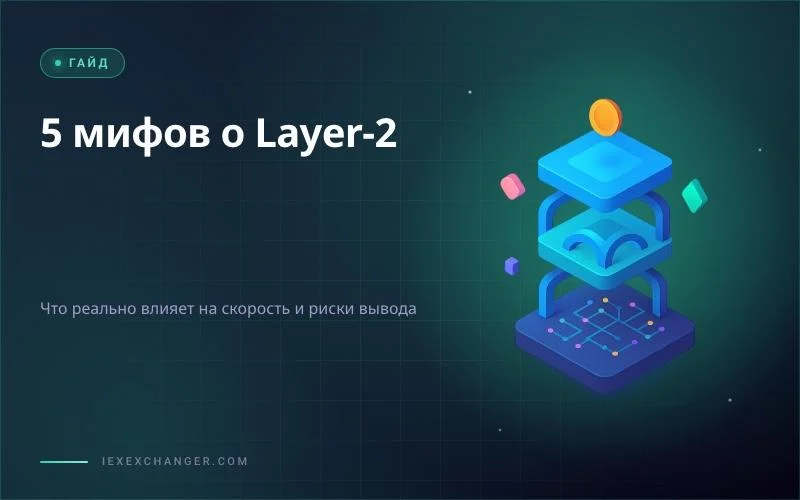
Not all Layer-2 networks work the same way. Trust models, withdrawal windows and bridge risk differ sharply — here are 5 myths that quietly cost crypto exchanger operators real money.